How Journaling App Pricing Affects Consistency
Explore how subscription, freemium, and one-time pricing models shape your relationship with a journaling habit and what to consider before choosing.

Loading content...
 Habit
HabitExplore how subscription, freemium, and one-time pricing models shape your relationship with a journaling habit and what to consider before choosing.
"How Journaling App Pricing Affects Consistency" — Habit Blog — https://habit.am/blog/best-journaling-app-no-subscription-helps-stay-consistent

Community builder and wellness enthusiast who believes small daily practices create big changes. Taylor’s 'Small Habits' methodology has been implemented in corporate wellness programs at over 5,000 organizations.
View all articles by Taylor Morgan →
If you've ever opened a wellness app and immediately closed it at the sight of a "Start Your Free Trial" screen, you are not alone. Subscription fatigue is common, and the way an app asks for money can shape whether you stick with it.
This post looks at how different pricing models affect journaling consistency, and what to consider before committing to a tool.
Most people think they stop journaling because they lack willpower. In many cases, the real culprit is usage guilt.
Research on habit formation by Wendy Wood at the University of Southern California found that guilt and performance pressure are among the strongest predictors of habit abandonment (Wood & Rünger, 2016). When a journaling app charges a monthly fee, your brain can treat it like a gym membership. Miss a few days, and the app starts to feel like a reminder that you are wasting money. That feeling often creates a negative loop:
A pricing model that matches your comfort level can reduce that pressure and make it easier to return after a break.
Most journaling tools fall into one of four categories. Each has a different psychological effect on consistency.
Some apps are completely free. They may show ads, limit certain features, or rely on other funding models. These tools lower the barrier to entry and remove financial guilt entirely. The trade-off is usually fewer features, less polished design, or less predictable long-term support.
Freemium apps offer a free basic version and charge for advanced features. This model lets you build a routine before spending money. If the free tier is generous enough for your needs, you may never need to pay. If you outgrow it, you can upgrade with confidence because you already know the tool fits your life.
A one-time purchase lets you pay a single fee and own the software indefinitely. This removes recurring charges and the monthly reminder to "get your money's worth." The trade-off is that major updates, cloud sync, or ongoing support may eventually require additional spending.
Subscription apps charge monthly or yearly. They often fund ongoing development, cloud sync, guided content, and customer support. For some people, the recurring cost creates helpful accountability. For others, it adds pressure that makes journaling feel like an obligation rather than a refuge.

The right pricing model depends less on the app itself and more on your relationship with money, habits, and technology.
There is no universal best model. What matters is whether the cost structure supports your specific tendency to start, stop, and restart habits.
Before picking a journaling app, consider these questions:
No pricing model can replace a format you enjoy. Many people find it helpful to begin with the lowest-pressure option available and establish a rhythm before spending money.
Consistency usually comes from low friction, not high cost.
Journaling app pricing is not just a budget question. It affects guilt, motivation, and whether you feel welcome returning after a break. By matching the pricing model to your temperament and starting with a low-pressure option, you can focus less on the cost and more on the practice.

Our 2,000-person journaling study found that half of participants 55+ would try the AI-enabled reflection—four times the rate among younger participants.

Marc Andreessen's call for zero introspection mistakes rumination for self-knowledge. Lao Tzu, Sun Tzu, and Marcus Aurelius offer a more useful distinction.
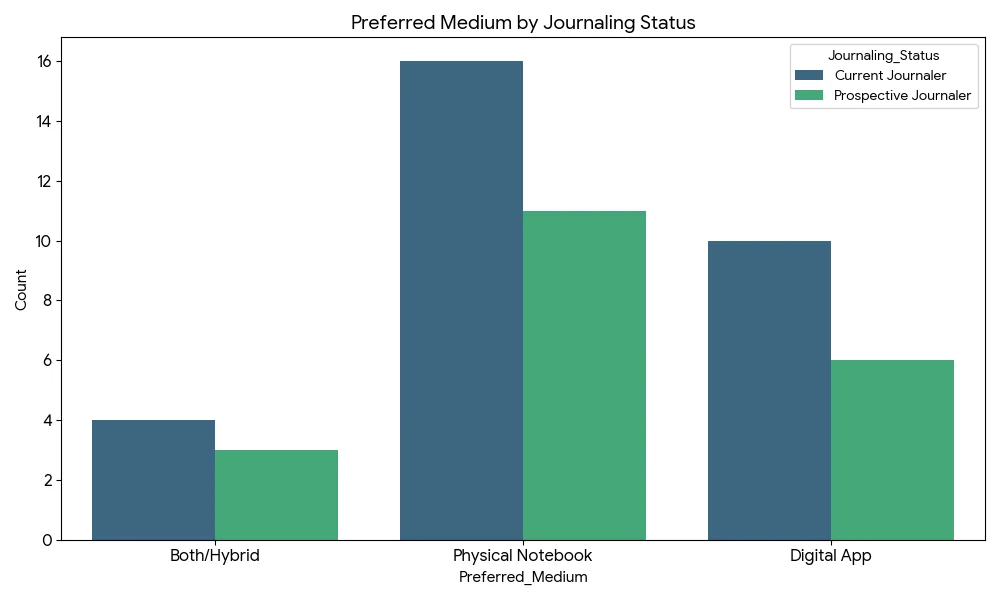
Daily journaling works best when you focus on consistency, not volume. Learn simple techniques to show up regularly and build a meaningful record over time.
Free Resources
For Professionals
© 2026 Habit. All rights reserved.
Build version: v3.0.0