How to Journal When You Don't Want to Write: A Low-Effort Guide
A simple, encouraging guide to low-effort journaling, using question-based prompts instead of writing paragraphs.

Loading content...
 Habit
HabitA simple, encouraging guide to low-effort journaling, using question-based prompts instead of writing paragraphs.
"How to Journal When You Don't Want to Write: A Low-Effort Guide" — Habit Blog — https://habit.am/blog/journal-for-lazy-people

Community builder and wellness enthusiast who believes small daily practices create big changes. Taylor’s 'Small Habits' methodology has been implemented in corporate wellness programs at over 5,000 organizations.
View all articles by Taylor Morgan →
If you've ever told yourself you should journal but the thought of writing a whole page feels like a chore, you're not alone. Low-effort journaling isn't about fixing your motivation. It's about giving your mind the simplest possible path to clarity and emotional grounding.
And here’s the truth: you don’t need perfect routines, pretty notebooks, or long heartfelt entries. You just need a few seconds and the right questions.
Welcome to the simplest way to journal.
Imagine sitting down with a blank page after a long day. Your brain is tired, you’re stressed, and the last thing you want to do is squeeze out paragraph after paragraph.
Traditional journaling asks for:
Which means on most days... it doesn’t happen.
That’s not a personal flaw. It’s just bad design.
When you're overwhelmed or low on energy, you want the benefits of journaling without the effort of traditional writing. That’s where guided, question-based journaling comes in.
The simplest form of journaling is answering one small question.
Not writing paragraphs.
Not pouring your soul onto a page.
Just checking in with yourself.
Guided journaling apps do this by giving you short, progressively deeper questions. You tap an answer. Then the next question meets you right where you are.
No blank pages.
No overwhelm.
No rules.
If you want the basics of guided questions, here’s how it works.
Because your brain loves shortcuts.
Guided questions eliminate the part where you:
You just react. Tap. Move on.
It’s journaling designed for real life, not Pinterest perfection.
Some benefits of this approach:
This surprises people.
When you remove friction from a habit, you remove the excuses.
You don’t get trapped in the perfectionism of 'I need to write three pages.'
Instead, you learn:
Small daily reflection questions help you become more aware, calmer, and grounded , without needing to sit down and write essays.
Read also: Benefits of Guided Journaling
Motivation follows momentum.
When you answer one tiny question, you feel:
Those micro-wins keep you coming back.
Low-effort journaling works because it respects your energy instead of demanding more of it.
Learning how to journal with low effort means understanding one thing: you don’t need long entries to grow. One small question a day can shift your entire emotional landscape.
You deserve clarity without pressure.
You deserve reflection without dread.
You deserve tools that work with your energy, not against it.
And if you ever felt like you "should" be journaling more… maybe you just needed a better way.

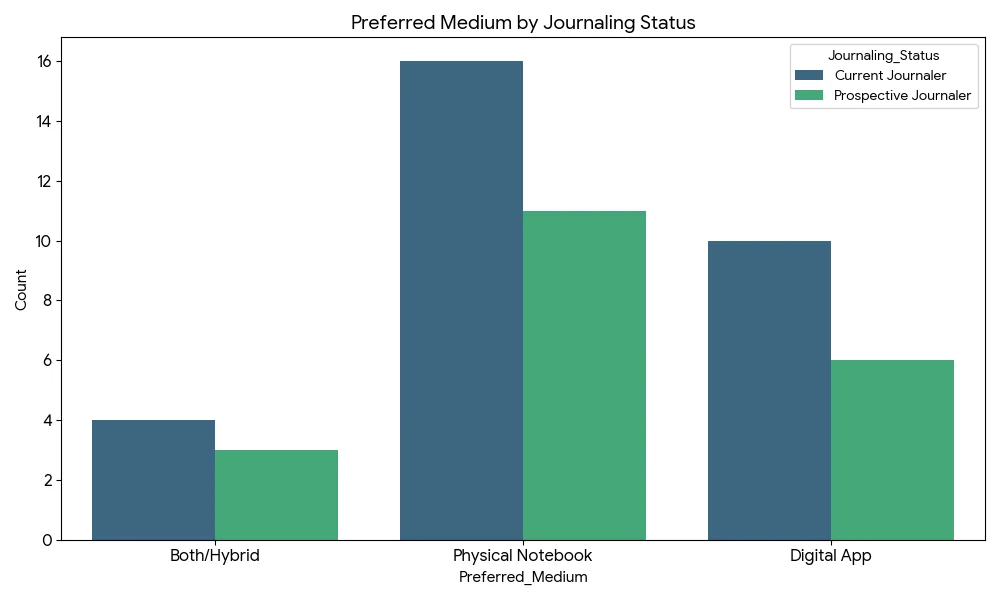
Our 2,000-person journaling study found that half of participants 55+ would try the AI-enabled reflection—four times the rate among younger participants.

Marc Andreessen's call for zero introspection mistakes rumination for self-knowledge. Lao Tzu, Sun Tzu, and Marcus Aurelius offer a more useful distinction.
Daily journaling works best when you focus on consistency, not volume. Learn simple techniques to show up regularly and build a meaningful record over time.
Free Resources
For Professionals
© 2026 Habit. All rights reserved.
Build version: v3.0.0