Marc Andreessen actually loves introspection, he just doesn't know it yet
Marc Andreessen's call for zero introspection mistakes rumination for self-knowledge. Lao Tzu, Sun Tzu, and Marcus Aurelius offer a more useful distinction.
Loading content...
 Habit
HabitMarc Andreessen's call for zero introspection mistakes rumination for self-knowledge. Lao Tzu, Sun Tzu, and Marcus Aurelius offer a more useful distinction.
"Marc Andreessen actually loves introspection, he just doesn't know it yet" — Habit Blog — https://habit.am/blog/marc-andreessen-loves-introspection

Founder of Habit and former researcher at the UCLA GameLab, Noemi specializes in the intersection of behavioral psychology and game design. She pioneered the application of 'game loops' to mental wellness, creating tools that make habit formation intuitive rather than clinical. Her insights on the tech industry have been featured in The Guardian.
View all articles by Noemi Titarenco →
On a podcast episode aired in March 2026, venture capitalist Marc Andreessen turned heads by advocating for a "zero introspection" philosophy.
Blaming Sigmund Freud and 20th-century psychology for poisoning the modern mind with self-doubt, Andreessen asserted that "400 years ago, it would never have occurred to anybody to be introspective" and that great historical figures simply took action rather than sitting around examining their feelings.
It is a compelling, Amazon-style bias-for-action rallying cry. But it lumps reflection in with neuroticism and misses how ancient strategists and leaders used introspection.
About 2,500 years before that podcast episode aired, the ancient philosopher Lao Tzu made looking inward a foundation for true strength.
In Chapter 33 of the Tao Te Ching, Lao Tzu explicitly elevates self-knowledge above external intelligence:
"Knowing others is intelligence; knowing yourself is wisdom. Mastering others is strength; mastering yourself is true power."
To Lao Tzu, a founder or leader who deeply understands his business but remains blind to their own ego and incentives is fragile, even if they are intelligent.
Maybe Marc would scoff at spiritual introspection. But he would certainly respect military strategy. Enter Sun Tzu, author of The Art of War, a text widely viewed by business leaders as essential reading on power and strategy.
Writing around the same era as Lao Tzu, Sun Tzu made self-knowledge the baseline for victory:
"If you know the enemy and know yourself, you need not fear the result of a hundred battles. If you know yourself but not the enemy, for every victory gained you will suffer a defeat. If you know neither the enemy nor yourself, you will succumb in every battle."
In Sun Tzu's world, a total lack of self-awareness that helps you take more action is not an advantage. If you do not know your own risk tolerance, emotional triggers, and decision-making biases, the market will exploit them without mercy. Strategy is introspection applied to competitive dynamics.
The military after-action report is an older predecessor of the modern software retrospective. One of the first and best examples of an AAR is Julius Caesar's Commentaries on the Gallic War.
The question is not, "How terrible am I because that failed?" It is: What happened? What did we expect? What did we learn? What will we do differently next time?
That is introspection with a job to do. It is not an invitation to sit in your feelings forever; it turns experience into better action.
I know what Marc is concerned about. I have also seen very smart people paralyzed by "what ifs." But I have seen entire organizations make the same mistakes repeatedly because they never wanted to address why a previous project failed, or even acknowledge that it failed.
The point of looking back is not to stall out. It is to see clearly enough that you do not drive into the same wall again.
Marcus Aurelius was not a theorist; he was the Emperor of Rome. Writing nearly 1,800 years before Andreessen's podcast, he spent his nights in military tents writing Meditations (titled To Himself in the original Greek), a private journal dedicated to deep, rigorous introspection.
To the philosopher-emperor, examining your own feelings was essential for anyone in a high-stakes leadership role:
"Look within. Within is the fountain of good, and it will ever gush forth, if thou wilt ever dig."
Marcus Aurelius is regarded as one of Rome's greatest emperors. His reign was not easy: he faced plague, wars, and economic strain.
Here is the twist: I do not actually think Marc Andreessen lacks self-reflection.
You do not build a career navigating tech cycles, learning from high-stakes failures, and constantly updating your thesis on the future without a feedback loop. Just taking action becomes dangerous. Andreessen obviously reflects on his wins and losses, as do the founders he backs. He just calls it something else. And they probably do have a bias for action overall.
Where Lao Tzu, Sun Tzu, Aurelius, and Andreessen actually agree comes down to a crucial distinction between rumination and observation:
Andreessen thinks he is rejecting introspection, but he is really rejecting modern psychological rumination.
True introspection is not sitting around feeling bad about yourself. It is a disciplined practice of developing self-awareness and a stable emotional baseline from which difficult decisions are made with confidence. And whether he admits it or not, that is the skill that helped make Andreessen who he is.

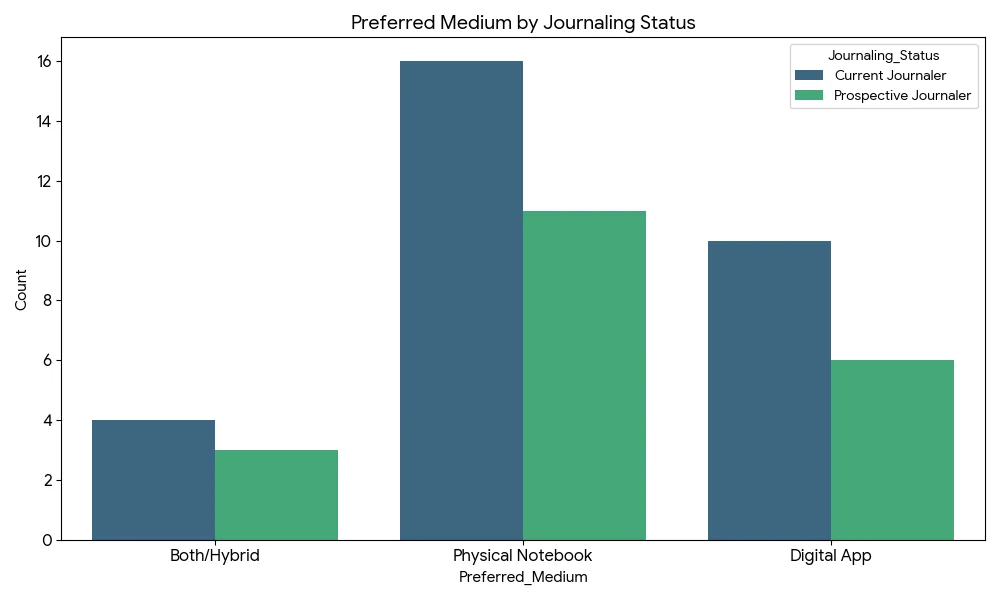
Our 2,000-person journaling study found that half of participants 55+ would try the AI-enabled reflection—four times the rate among younger participants.
Daily journaling works best when you focus on consistency, not volume. Learn simple techniques to show up regularly and build a meaningful record over time.


You cannot find Manifestation of Creation on Amazon or in bookstores. That is because it appears to be a fake book sold through bot-driven comments and sketchy storefronts. Here is what is really going on.

Free Resources
For Professionals
© 2026 Habit. All rights reserved.
Build version: v3.0.0