We are living in a wild, world-changing era of mental health awareness! Honestly, as a former therapist, it makes my heart do a little happy-dance to see people finally ditching the "just get over it" mentality and embracing their inner landscapes. We've swapped push those feelings down for feeling our feelings and that is a massive win!
But (and it's a big, glittery, neon-signed BUT) have you noticed your group chats starting to sound a little like a Psychology Today article crossed with an HR manual? Enter: Therapy Speak.
You know the ones. These terms are showing up in your heart-to-hearts, girly chats, and even in memes:
- Gaslighting
- setting boundaries
- Feeling dysregulated
- holding space
- emotional labor
- Trauma dumping
- Nervous system regulation
- Codependent
- Love bombing
- Triggered
- Validated
We've traded "I'm having a rough day" for "I don't have the capacity for your emotional labor right now." While it's fabulous that the stigma around mental health is crumbling, we've hit a snag. These words were originally meant to be clinical tools, used in a safe, guided environment, to articulate abstract and challenging psychological dynamics. Very importantly, they're used to help individuals understand their own emotional landscape. When they're stripped of this clinical context and tossed onto the "explore page," they can mutate. When they're weaponized, they become toxic.
Here is the heart of the issue: These words can help us formulate structure out of the messy, vulnerable, and sometimes inconvenient parts of being human, when you are at your limit. Most people? They would benefit more from sitting with that messiness rather than putting it in a safe box. "Therapy speak" doesn't bring us closer, it builds a wall. We aren't actually communicating; we're just labeling. If we aren't careful, our quest for "healthy" language is going to leave us more isolated than ever.
The Evolution of Therapy Speak: From the Couch to the Comment Section
Not too long ago, these big clinical terms were living a quiet, dignified life in dusty textbooks and dimly lit offices with off-white curtains and abstract art on the walls. They were specialized tools used by professionals to help people untangle the giant knots in their hearts. But then? The internet happened. And boy, did it happen fast.
Why it went viral: Snackable Psychology
Let's be real: Psychology is dense. It's messy, it's nuanced. But as we know, the internet has a difficult relationship with nuance!
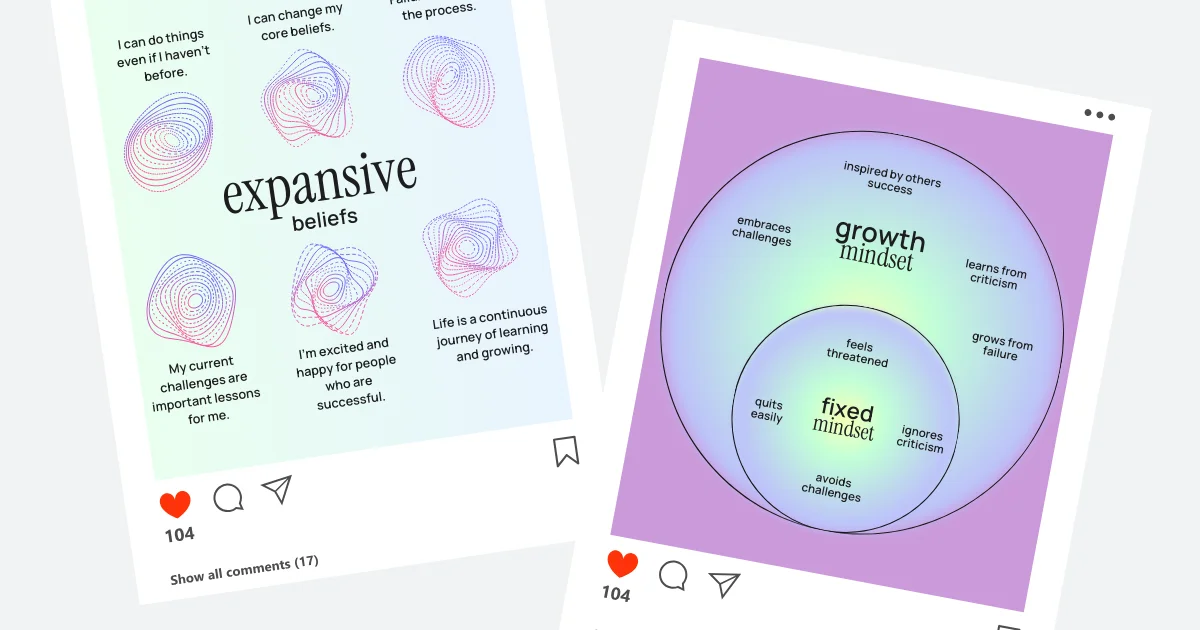
Around the early 2020s, we started seeing "Psychology Lite" everywhere. Complex theories were boiled down into "you go girl" inspirational memes and aesthetic pastel infographics. Suddenly, you could learn about "attachment styles" while eating your morning avocado toast! It was amazing because it opened up a wider conversation about mental health, why we are the way we are, and how we can be better versions of ourselves. But here's the kicker: instead of widening this conversation with our own lived experiences and language, we started using psychology degree jargon without the psychology degree. When you do that, the context behind those words is the first thing to get lost. We traded deep personal understanding for "snackable" generic content that felt like a breakthrough but was actually just a glorified zodiac.
The Great Flip: How "Know Thyself" Became "Fix Everyone Else"
This is where I might ruffle some feathers. Originally, these terms were meant for introspection. You'd learn about "boundaries" to understand your own needs and to learn new ways to think about your relationships. You'd talk about "triggers" to manage your own healing and develop an understanding of your own behavior, which, in the moment of an actual trigger, may be difficult to grasp.
But as this language migrated into our DMs, the intent shifted from self-understanding to other-managing. Instead of using this language to open a door to conversation, we started using it as a shield to avoid discomfort ("I don't have the capacity for this!") or a weapon to win an argument ("You're literally gaslighting me right now!"). We stopped saying "This hurts my feelings" and started saying "Your behavior is toxic." One invites connection; the other ends the conversation before it even starts.
The Hidden Dangers of Weaponized Language
We're diving into the deep end now. As a former therapist, this is the part where I have to get a little "real talk" with you. It's one thing to use a buzzword in a caption; it's another thing entirely when that buzzword starts dismantling your relationships. (But honestly - can we stop doing both?) When we take clinical terms out of the treatment room and drop them into our living rooms without the "safety manual," things can get messy, and not the "good, vulnerable messy," but the "damaging, cold messy."
Pathologizing Normal Conflict

First off, can we talk about how we've started labeling every disagreement as a psychological symptom or disorder? Conflict is actually a healthy part of being human! It's how we grow. But lately, I've noticed a trend where "I'm insecure" becomes "You are gaslighting me." Or "You don't act like I want you to" becomes "You're a narcissist." Even worse is when I see people demanding boundaries and destroying relationships as a way to avoid vulnerability or healthy conflict. Therapy speak ends up powering a full circle back to unhealthy conflict, along with denial, making unraveling this mess that much harder.
When we pathologize normal human friction, we stop looking for solutions and start looking for a diagnosis. If I decide you're "toxic," I don't have to listen to your perspective anymore. I've labeled you, filed you away, and effectively ended the chance for us to actually resolve the issue. This is not how healthy relationship dynamics work. We're losing the art of the "good old-fashioned argument" and replacing it with standoffs that escalate to "something is psychologically wrong with you." It's hard to see these wonderful tools being used in such a hurtful way.
The "Boundary" Paradox: Self-Care or Selfishness?
Now, let's get into the "B-word": Boundaries. I love a good boundary. They are the gates that keep our gardens healthy! But lately, these gates are looking more like 20-foot concrete walls with barbed wire.
There is a razor-thin line between "protecting your peace" and simply being a bad friend. We've all seen the scripts: "I'm currently at capacity and cannot hold space for your emotional labor." While technically "correct," it feels like being handed a subpoena by someone you love. Friendship, parenting and almost every close relationship sometimes requires you to stretch beyond what you feel you can do. What's important is that this doesn't become the norm. However, the boundary-police reject any sort of self-sacrifice for others. This shift has sparked a massive cultural debate. In fact, a recent USA Today report highlights exactly this: the growing concern that Gen Z might be misusing Therapy Speak to the point of appearing (or becoming) selfish.
When we use "boundaries" as an excuse to never be inconvenienced, we aren't practicing self-care; we're practicing emotional avoidance. Real relationships require us to occasionally show up when we don't have "full capacity." That's what love is! If we only show up when it's convenient and clinically "safe," we're going to end up very healthy, very regulated, and very, very lonely.
Creating Emotional Distance
Lastly, there is the "Intellectual Shield." This is a sneaky one! Sometimes, we use therapy speak because we are actually afraid of our feelings. It is much easier to say, "I am experiencing a nervous system dysregulation," than it is to say, "I am absolutely terrified and I need you to hold me." Jargon acts as a buffer. It's sterile. It's safe. It keeps the "scary feelings" at arm's length. But here's the secret I used to tell my clients: Intimacy lives in imperfect communication. When we use a textbook to describe our hearts, we're keeping people at a distance. We're performing "healthiness" instead of actually being with someone. We are trading the warmth of a hug for the precision of a diagnosis, and it's leaving us emotionally malnourished.
Why "Therapy Speak" Can Be Prohibitive to Healing
If you've stuck with me this far, you might be thinking, "Wait, aren't these words technically correct? What's wrong with using them if I'm using them right!" And I get it! We use this language because we want to be better, more evolved versions of ourselves. But here is the professional "plot twist" from my years on the clinical side of the couch: leaning too hard on therapy jargon can actually stunt your emotional growth. It feels like progress, but sometimes it's just a very fancy way of standing still. They are tools that can be very helpful when we can't figure out what we are feeling or why certain relationship dynamics always follow a particular pattern. But here's something that we don't talk about enough: you're supposed to grow out of using them. They're like training wheels for you to gain confidence in naming your emotions, understanding your own boundaries, knowing what you tolerate and what you don't. They are not meant to be part of your vocabulary or your identity.
The Loss of Nuance: Flattening the Human Experience
When we slap a clinical label on a feeling, we often stop actually feeling it. Labels are like folders in a filing cabinet; once you put a paper in a folder marked "Generalized Anxiety" or "Dismissive Avoidant," you tend to stop looking at the paper. You think, "Oh, I know what that is. Case closed." NOTHING ELSE TO FEEL HERE, FOLKS!!!
Healing isn't about categorization; it's about nuance.
When we say, "I'm triggered," we might be bypassing the much more informative, messy truth: "I feel embarrassed because I care what these people think of me, and that reminds me of how I felt in middle school." See the difference? The first one is a medical-sounding shut-down. The second one is a map to your soul! By using "technically correct" labels, we flatten our multi-dimensional human experiences into one-dimensional buzzwords. This prevents deep self-reflection because we stop asking the "why" and settle for the "what." If you want to heal, you have to be willing to sit with the complexity of your specific, unique pain, not just the textbook definition of it.
The Isolation Factor: The Textbook Barrier

Let's talk about your "people." Your partner, your bestie, your mom. They love you, not all the labels you've assigned to yourself. When you start identifying stronger with these labels than with your nuanced real experience, you might be inadvertently isolating yourself.
Think about it: Intimacy is built on imperfection. It's built on those fumbled, awkward attempts to say, "I'm hurting and I don't know why." When you replace that vulnerability with a phrase like, "I am currently processing my attachment wounds and need you to validate my experience," you are essentially handing your loved one a script to read instead of an invitation to connect.
It's hard for people to connect with a "perfectly regulated" version of you. (Not to mention that it's never been the goal, as far as I know, to be "perfectly regulated")
When we use therapy speak to stay "safe" and "correct," we actually starve our relationships of the raw, authentic connection they need to thrive. Speaking like a textbook makes you sound like a professional, like you know what you're talking about, but it makes you feel like a stranger. (And for many people, that's intentional. They don't want to be real because being real, well, it's hard, and it can hurt.)
Healing happens in community, and community requires you to show up as the real, unedited version of yourself. It requires you to be your WHOLE self, not just a jumble of identities and diagnoses and pathologies. Sometimes it helps to think about how thousands of years ago, humans dealt with many of the same anxieties, challenges, and emotions. They had different names for all of them. In 2000 years, we'll have yet more names and labels and psychological concepts. But the real experiences and feelings of all these people? Across thousands of years, the reality of feeling stays the same. The pinnacle of psychological knowledge in 2026 is not the be-all-end-all. Science is always learning and changing. Just like you.
The Therapist's Reality Check: When Jargon is Actually the Hero
Before you go deleting "boundaries" from your vocabulary and burning your copies of The Body Keeps the Score, let's take a minute. I know I've been dragging "Therapy Speak" through the mud a bit, but as a former therapist, I have to tell you: I don't hate these words. In fact, I love them! In the right setting, these terms aren't just helpful, they are heroes. They save lives, relationships and families. They are the difference between drowning in a sea of nameless pain and finally finding a life raft.
The problem isn't the tool; it's the application. A scalpel is a miracle in the hands of a heart surgeon in a sterile OR, but you wouldn't use one to cut your birthday cake, right? (Please say no. The visual is making me uncomfortable.)
The Surgical Precision of Clinical Context
Inside the "protected laboratory" of a therapy session, clinical language is life-saving. For someone managing a severe clinical condition, like C-PTSD, Bipolar Disorder, or clinical OCD, these terms provide a necessary, objective framework. When you are in the thick of a profound mental health crisis, you need professional support.
In that space, helping someone process "I'm experiencing a dissociative episode" or "This is a trauma response" isn't a trend; it is a vital observation that allows a professional to help you stabilize. These words allow us to categorize symptoms so we can apply the right treatment. They provide a common language that bridges the gap between a patient's internal chaos and a professional's medical knowledge. For someone navigating the heavy, dark waters of deep clinical work, these terms aren't isolating, they're an open door to healing.
Distinguishing Genuine Trauma from Daily Friction
Here's the "real talk" part of the reality check: we have to learn how to tell the difference between a clinical emergency and a "humble pie" moment.
Not every negative interaction is "abuse." Not every person who is bad at listening is a "narcissist." And, I'm gonna hold your hand when I say this, not every uncomfortable feeling is a "trigger."
When we use trauma-level language to describe paper-cut-level problems, we devalue the experience of people who are actually in the "surgical" phase of their healing. If you're just annoyed, say you're annoyed! If you're hurt, say you're hurt! Sometimes, the healthiest thing you can do is genuinely figure out exactly how you feel, why, and what would make you feel better. This is a life skill I've helped many clients with - thankfully, not having this skill isn't a sign of a profound clinical problem, just a gap in emotional life skills.
The Ultimate Goal is Graduation

I used to tell my clients this all the time: My goal is to work myself out of a job. If I've done my work well, you should eventually stop needing me, but before that, our sessions will eventually stop needing the jargon.
In the therapy room, these concepts are like scaffolding. You use them to support the building while it's under construction. You use "attachment theory" to understand why you're afraid of intimacy, and you use "emotional regulation" to learn how to not blow up when you're stressed. But once the building is strong? The scaffolding comes down! Not everything connects to your attachment. These ideas do not define your entire life. They're simple, helpful tools that can provide some temporary framing to your problems.
You're meant to graduate into a life where you just... relate to people. The ultimate goal of therapy isn't to become a master of therapy speak; it's to gain enough self-awareness that you can finally just be yourself confidently - and that you can feel what you feel with acceptance.
Toward Becoming Whole: What We Need More Than a Better Psychological Vocabulary
We've spent the last few years becoming experts on our own "stuff." We know our triggers, our attachment styles, and our boundaries. But the next frontier of mental health isn't about finding a better vocabulary, it's about Wholeness. It's about stepping out from behind the clinical curtain and actually letting ourselves be known.
Trading Self-Optimization for Shared Humanity
There's been a lot of talk lately (as that USA Today article pointed out) about whether we are becoming "selfish" under the guise of self-care. Here's my professional take: Mental health has accidentally become a "solo sport." We've treated ourselves like iPhones that need constant optimization, software updates, and "do not disturb" modes. We've built these perfectly regulated "solo fortresses" where we are safe, but we are also incredibly alone.
True resilience doesn't happen in a solo fortress. It happens in the web of connection. Healing isn't about becoming so "optimized" that you never need anyone; it's about becoming brave enough to realize you do need people. We need to move away from "What is best for my personal brand of wellness?" and toward "How can I be a healthy part of this community?" Shared humanity means we show up even when we're a little tired, and we let others show up for us even when we're a little messy.
The Healing Power of "I'm Sorry" (And Other Tiny Words)
When we use Therapy Speak, we've over-complicated things! We reach for terms that feel authoritative. But you know what actually heals a rupture?
- "I'm sorry."
- "I messed up."
- "I need help."
- "Tell me more about why you feel that way." (and actually listening)
- "Stay." (Choosing presence over "protecting your peace")
These words carry more weight because they require vulnerability, not just a vocabulary. In the end, your friends don't need a therapist-lite; they want the real human version of you.
Finding the Beauty in the Unlabeled Mess
As we wrap this up, I want to give you a final, high-energy permission slip: You are allowed to be a mess that doesn't have a name yet.
You are a wild, complex, beautiful human being. You are a collection of stories, laughter, weird habits, and specific ways of loving that will never fit into a diagnostic category. And that is a feature, not a bug! The pinnacle of your psychological journey isn't to be "perfectly labeled", it's to be whole.
Wholeness includes the parts of you that are "technically" dysregulated, the parts that are still figuring out how to set a boundary without shaking, and the parts that still love people who are "toxic." That's the real stuff. That's the "messy middle" where life actually happens.
So, use the tools when you need them. Take the training wheels out for a spin when you're feeling wobbly. But when you're feeling stable, put them down. Look the person you love in the eye and just say "Hey. I'm here. I'm messy. And I'm so glad we're in this together." (in your own words, bbs.)