What makes a guided journal app actually stick?
What to look for in a guided journal app if you have struggled to stay consistent with reflection.
Loading content...
 Habit
HabitWhat to look for in a guided journal app if you have struggled to stay consistent with reflection.
"What makes a guided journal app actually stick?" — Habit Blog — https://habit.am/blog/simple-journaling-habit-app

Community builder and wellness enthusiast who believes small daily practices create big changes. Taylor’s 'Small Habits' methodology has been implemented in corporate wellness programs at over 5,000 organizations.
View all articles by Taylor Morgan →
Most of us have tried journaling. We buy a notebook, write for three days, then leave it in a drawer. We download an app, open it to a blank page, and close it again. The result is not just an abandoned notebook. It is a small pile of guilt.
If you want to journal more, the first question is not which app to download. It is which format you can actually keep doing.
This is the lowest-tech option. Before bed, write one sentence about something that happened today or something you feel. No prompts, no structure, no pressure.
Use whatever notes app is already on your phone. Some people write a few bullets. Others paste a recurring template with three questions.
A guided format asks you questions and gives you response options instead of a blank page. You check in, answer, and get a short summary.
Each format has tradeoffs. The rest of this post focuses on what makes a guided check-in work and what to look for if you choose that route.
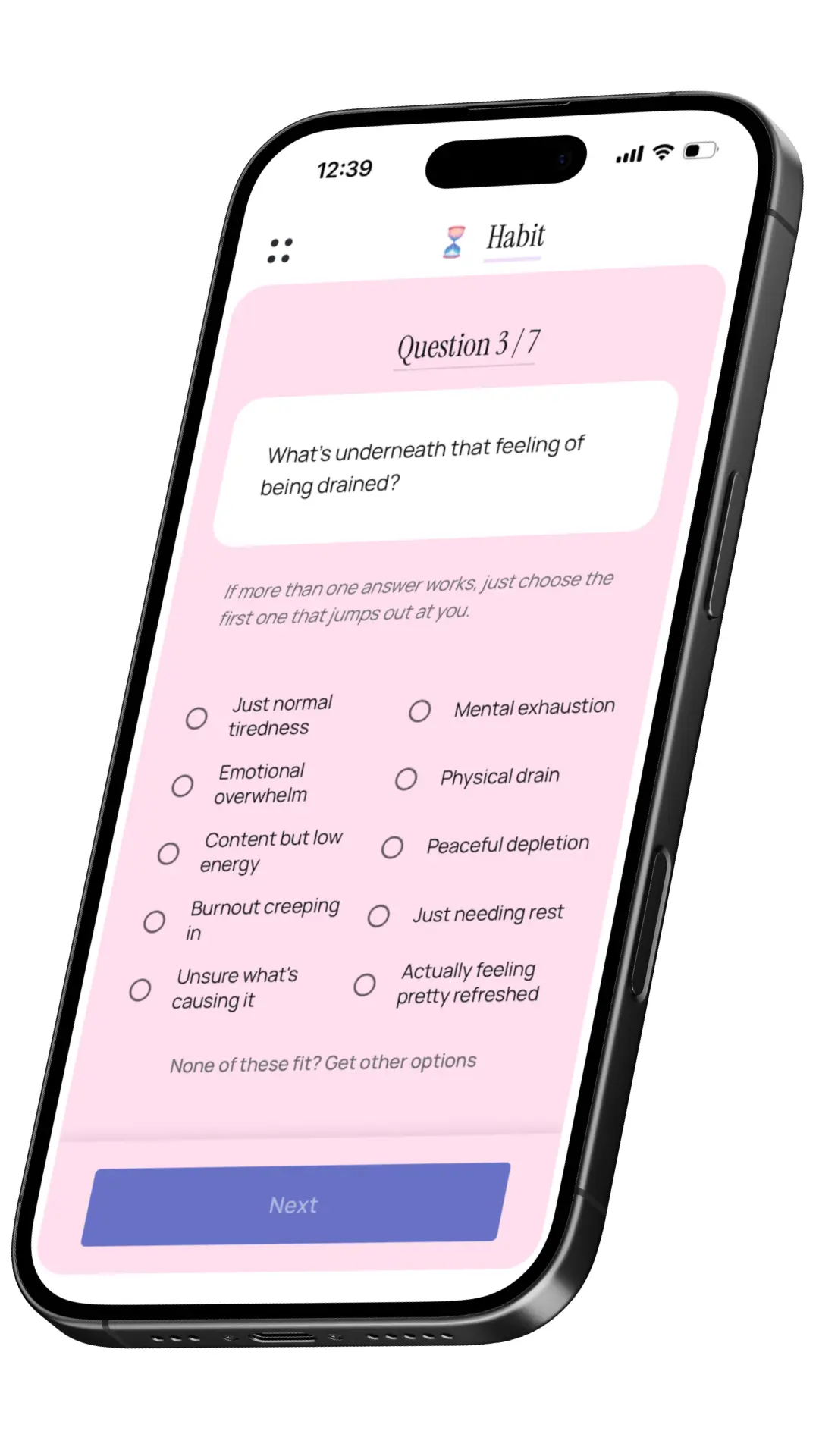
A guided check-in is a short, question-based reflection. Instead of writing paragraphs, you answer a set of questions by selecting the option that fits your experience. A check-in might start with "How are you feeling right now?" and offer choices like calm, overwhelmed, restless, hopeful, or mentally tired.
The questions usually build from surface-level awareness to deeper reflection. By the end, you get a short summary of what you explored.
Guided check-ins are not the only useful format. Consider these if you want more flexibility:
Not every guided format is worth your time. Look for these qualities:
Guided check-ins tend to work well if you:
They are not for everyone. You may prefer a notebook or notes app if you:
Research by James Pennebaker on expressive writing shows that consistent journaling can help with both depression and anxiety. In one line of studies, structured reflection over multiple weeks provided mental health benefits similar to traditional journaling, including greater self-understanding, emotion management, and cognitive clarity.
The key is consistency, and low-friction formats tend to produce it. By removing the friction of writing and the pressure of perfection, you are more likely to show up regularly. And regular practice is where the real benefits happen.
Pick one option and try it for one week:
The best journaling format is the one you actually use.

Our 2,000-person journaling study found that half of participants 55+ would try the AI-enabled reflection—four times the rate among younger participants.


Marc Andreessen's call for zero introspection mistakes rumination for self-knowledge. Lao Tzu, Sun Tzu, and Marcus Aurelius offer a more useful distinction.
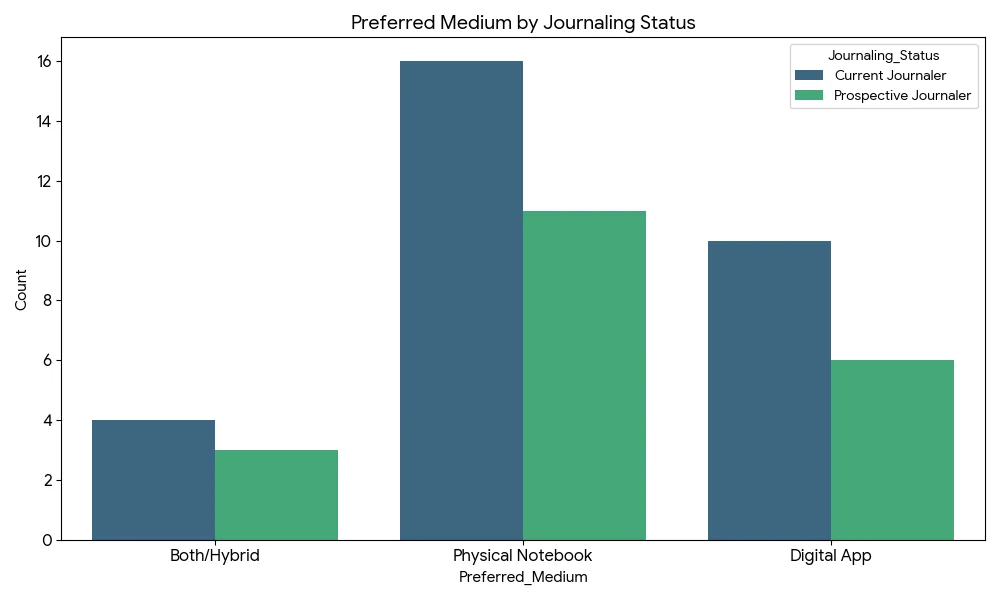
Daily journaling works best when you focus on consistency, not volume. Learn simple techniques to show up regularly and build a meaningful record over time.
Free Resources
For Professionals
© 2026 Habit. All rights reserved.
Build version: v3.0.0