Habit - Guided Journaling App LogoHabit
  1. Home
  2. /
  3. Blog
  4. /
  5. Journaling Methods & Tools

Written Journaling vs. Visual Journaling: Why Your Brain Might Prefer Symbols Over Sentences

Struggling to keep a daily diary? As a therapist, I’ve seen how 'Blank Page Syndrome' stops wellness habits in their tracks. Discover the science-backed differences between written and visual journaling and why wordless reflection might be the missing piece for your mental health.

Sam Ramirez
Sam Ramirez
December 21, 2025
Written Journaling vs. Visual Journaling: Why Your Brain Might Prefer Symbols Over Sentences
Loading content...

Ready to start your journaling journey?

Get startedLearn how Habit works

About the Author

Sam Ramirez

Sam Ramirez

Former Licensed Clinical Social Worker (LCSW) with a Master’s in Psychology from Georgia State University. Sam spent a just under a decade in clinical practice focusing on Cognitive Behavioral Therapy (CBT.) Passionate about subclinical conditions and improving quality of life through quality relationships.

View all articles by Sam Ramirez →

We’ve all been there: sitting down with a beautiful new notebook, a fresh cup of coffee (oat milk latte for me, please!), and a heart full of intention... only to stare at the blank white page until the coffee goes cold.

As a therapist, I’ve recommended journaling to hundreds of clients. But over the years, I noticed a pattern. For many, the traditional advice to "just write how you feel" actually created more stress. If you’ve ever felt like journaling was a chore you kept failing at, I have a secret for you: Your brain might just speak a different language.

Let’s break down the battle of the journals: Written vs. Visual.


The Heavy Lift: Written Journaling

Traditional journaling is powerful, but it requires high cognitive load. To write a sentence, your brain has to:

  1. Identify a complex, messy emotion.
  2. Find the specific vocabulary to describe it.
  3. Organize those words into a logical, grammatical structure.

For people navigating ADHD, burnout, or high anxiety, this process can feel like trying to run heavy software on a low battery. We get stuck in our heads, over-editing our feelings before they even hit the paper.

The Fast Track: Visual (Wordless) Journaling

Visual journaling, using symbols, colors, or emojis, taps into a different part of the brain. Research in neurobiology suggests that our limbic system (the emotional center) processes images and symbols faster than language (Paivio, 1986).

When you use a tool like an emoji storyboard, you aren't translating your feelings; you're mapping them. It’s low-friction, high-insight reflection.


Which One Should You Choose?

FeatureWritten JournalingVisual Journaling (habit.am moodboards)
Best for...Deep narrative processingPattern recognition & consistency
Time Required10–20 minutes30 seconds
Energy LevelHigh (Requires focus)Low (Perfect for 'low-power' days)
The BarrierThe "Blank Page" anxietyNone, just pick a vibe

Why I Love the Wordless Approach

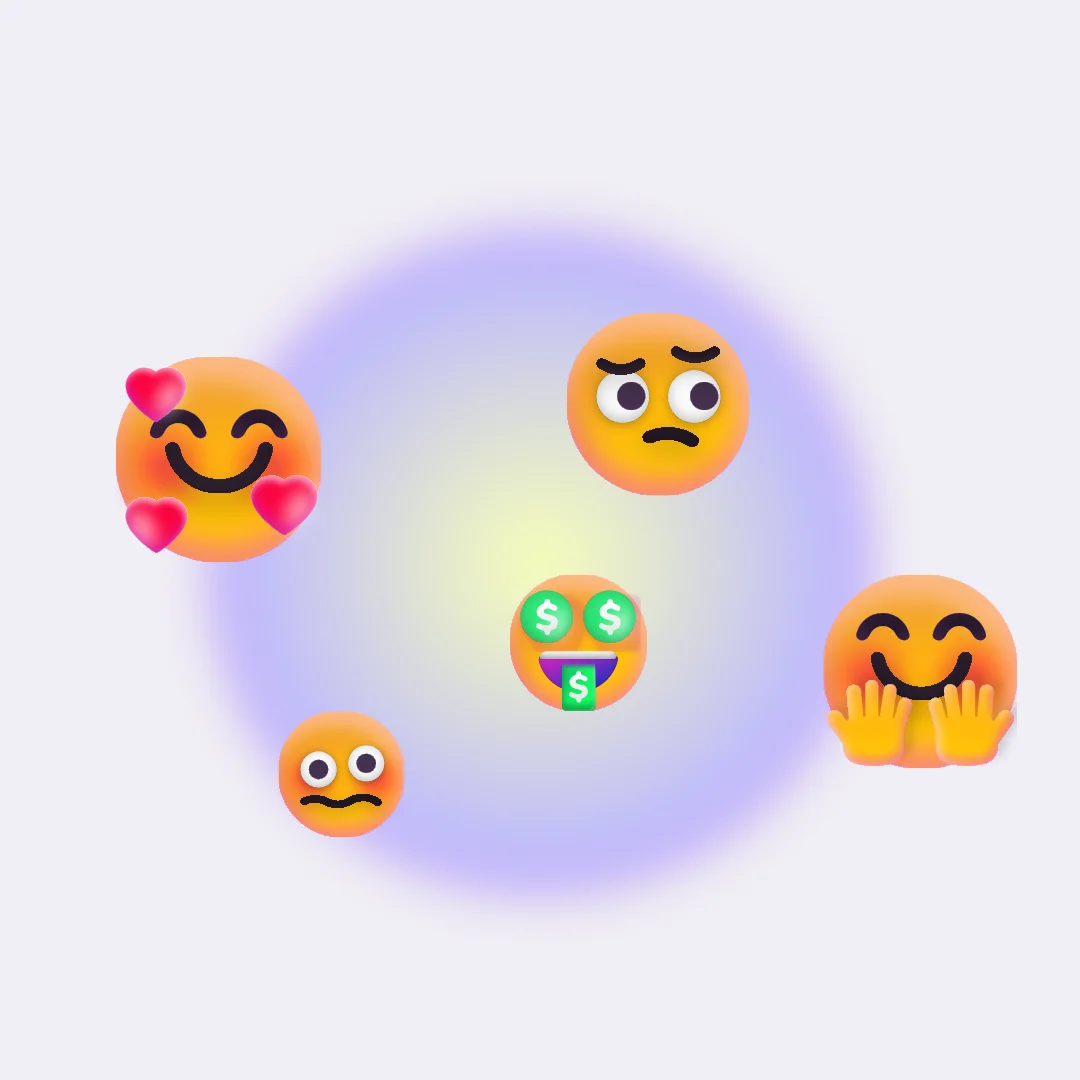
In my practice, I’ve found that "wordless" entries often capture the truth of a day better than a three-page essay. A single 😖 (confounded face) or a splash of deep blue tells a story of energy and mood that words sometimes sanitize.

If you’re tired of the "journaling guilt," I want to give you permission to stop writing. You don't need a masterpiece; you just need a pulse check.

Ready to try the wordless way? Stop by our Free Mood Storyboard Tool and see how it feels to express your day without saying a single word. If it clicks, you can save your journey forever on Habit


Keep Reading

Illustration accompanying an essay about Marc Andreessen, introspection, and ancient wisdom

Marc Andreessen actually loves introspection, he just doesn't know it yet

Marc Andreessen's call for zero introspection mistakes rumination for self-knowledge. Lao Tzu, Sun Tzu, and Marcus Aurelius offer a more useful distinction.

Noemi Titarenco
Noemi TitarencoJuly 21, 2026
Daily Journaling Techniques: Small Practices, Lasting Clarity

Daily Journaling Techniques: Small Practices, Lasting Clarity

Daily journaling works best when you focus on consistency, not volume. Learn simple techniques to show up regularly and build a meaningful record over time.

Taylor Morgan
Taylor MorganJuly 17, 2026
A wallet on a plain background, symbolizing money spent on questionable online products

Manifestation of Creation by Kain Vale: Where Can You Get It, and Is It Even Real?

You cannot find Manifestation of Creation on Amazon or in bookstores. That is because it appears to be a fake book sold through bot-driven comments and sketchy storefronts. Here is what is really going on.

Jordan Kapinksy
Jordan KapinksyJuly 16, 2026
Try Habit

About

Pricing

BlogHelp

FAQ

Contact

Terms & Privacy

Free Resources

Random Journal Prompt GeneratorExplainer: Guided Journal PromptsInteractive Breathing ExerciseFeeling Identifier Quiz

For Professionals

Journaling Tool for TherapistsJournaling Tool for ADHD CoachesJournaling Tool for Life Coaches

© 2026 Habit. All rights reserved.

Build version: v2.18.6