 HabitHabit
Press resources for Habit—a daily journal built around prompts, not blank pages
Achieve the clarity and calm of a consistent journaling practice in just a couple of minutes a day—no blank page required. Habit gives you one fresh prompt each day, with the option to choose another; you pick one and write a line or two.
Most people love the idea of journaling, but they struggle to stay consistent. Habit makes it easy: every morning it offers a fresh prompt, and you answer the one that speaks to you in a line or two. Every saved entry builds a journal you can actually look back on. This matters now because mental health needs are growing globally, and low-friction forms of reflection can help bridge the gap between evidence-based practice and real-world implementation.
— Noemi Titarenco, Founder of Habit
Achieve the clarity and calm of a consistent journaling practice in just a couple of minutes a day. Instead of facing a blank page, you pick from one fresh prompt each day, with the option to choose another and write a line or two. Entries are saved to your journal, ready to export or delete whenever you choose.
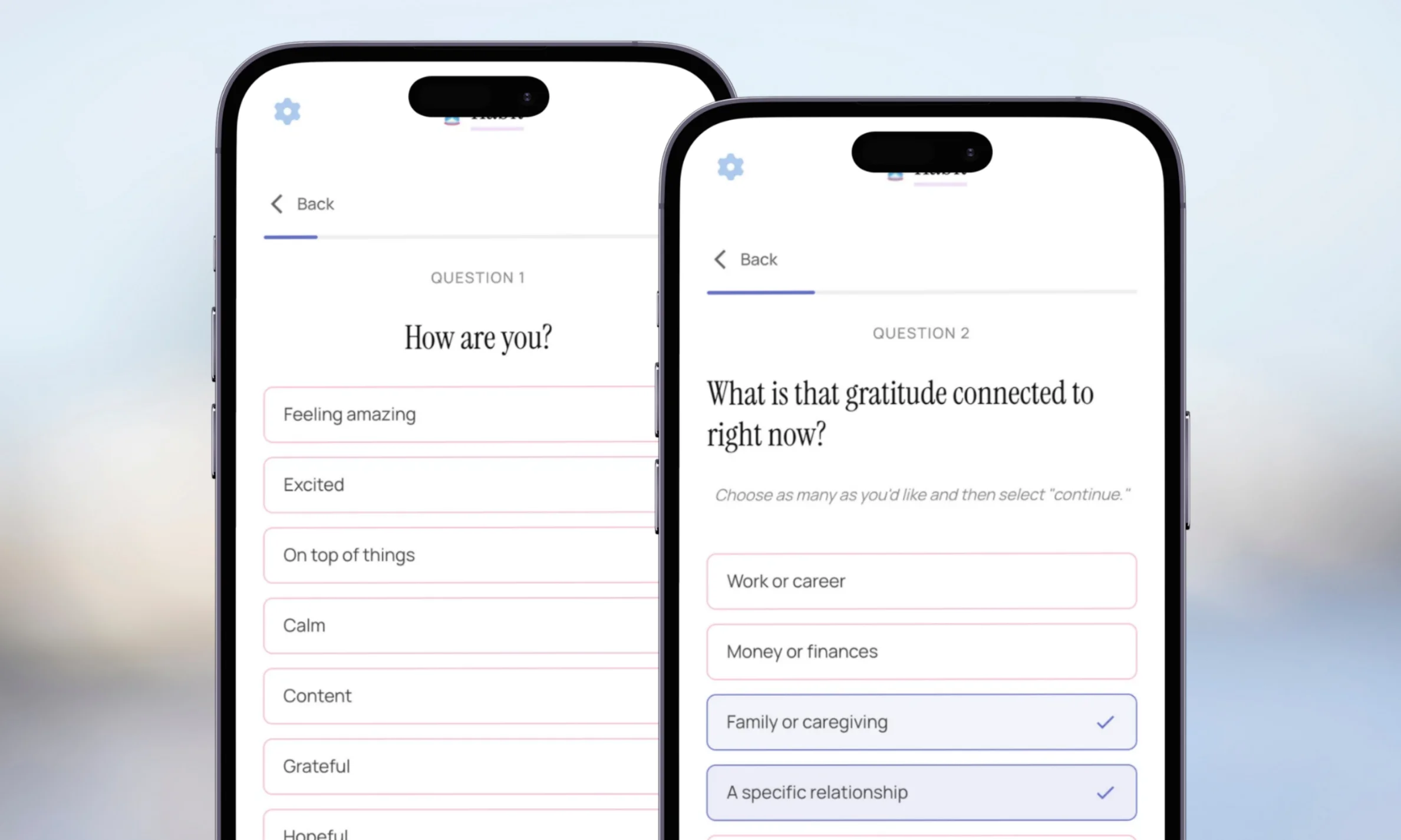
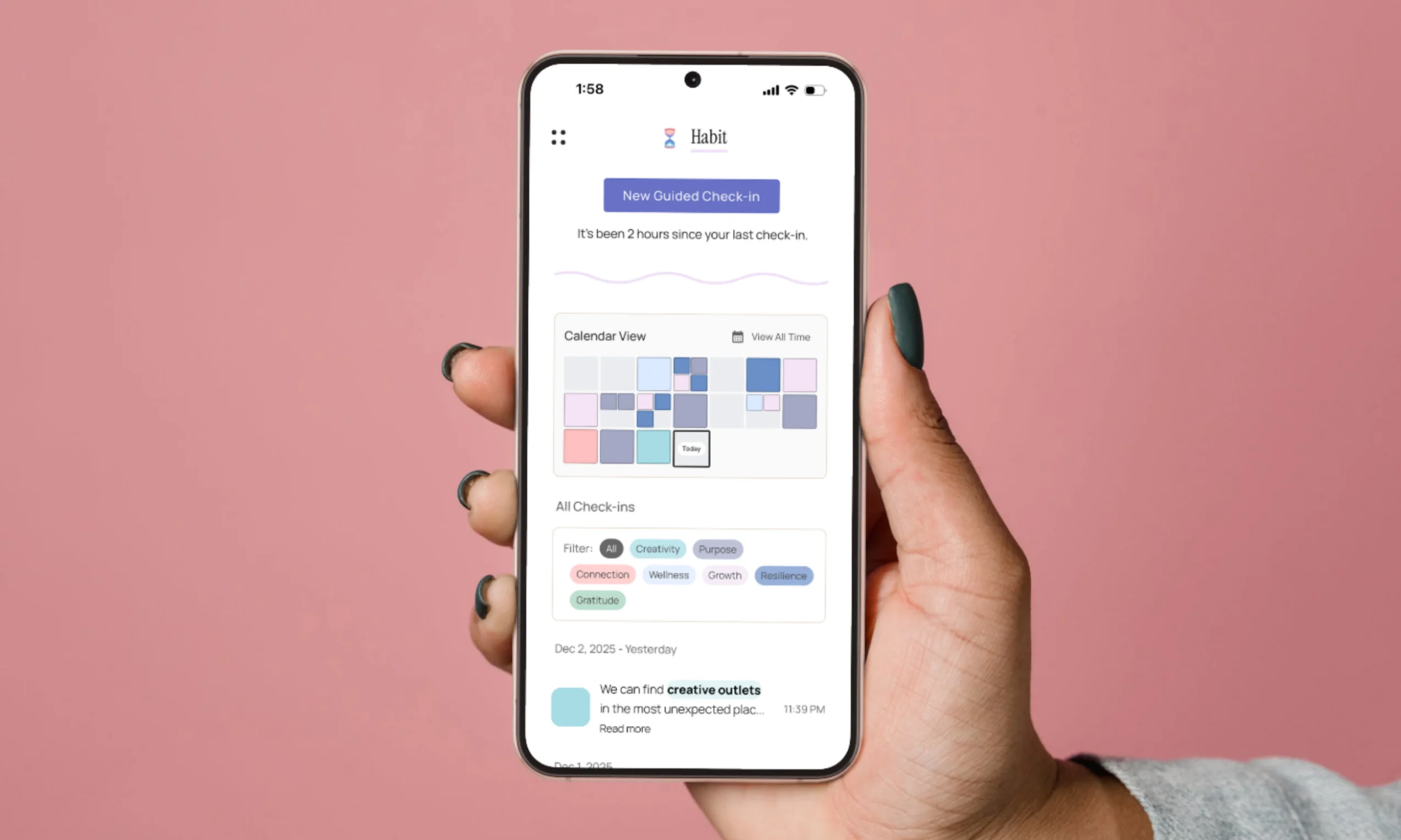
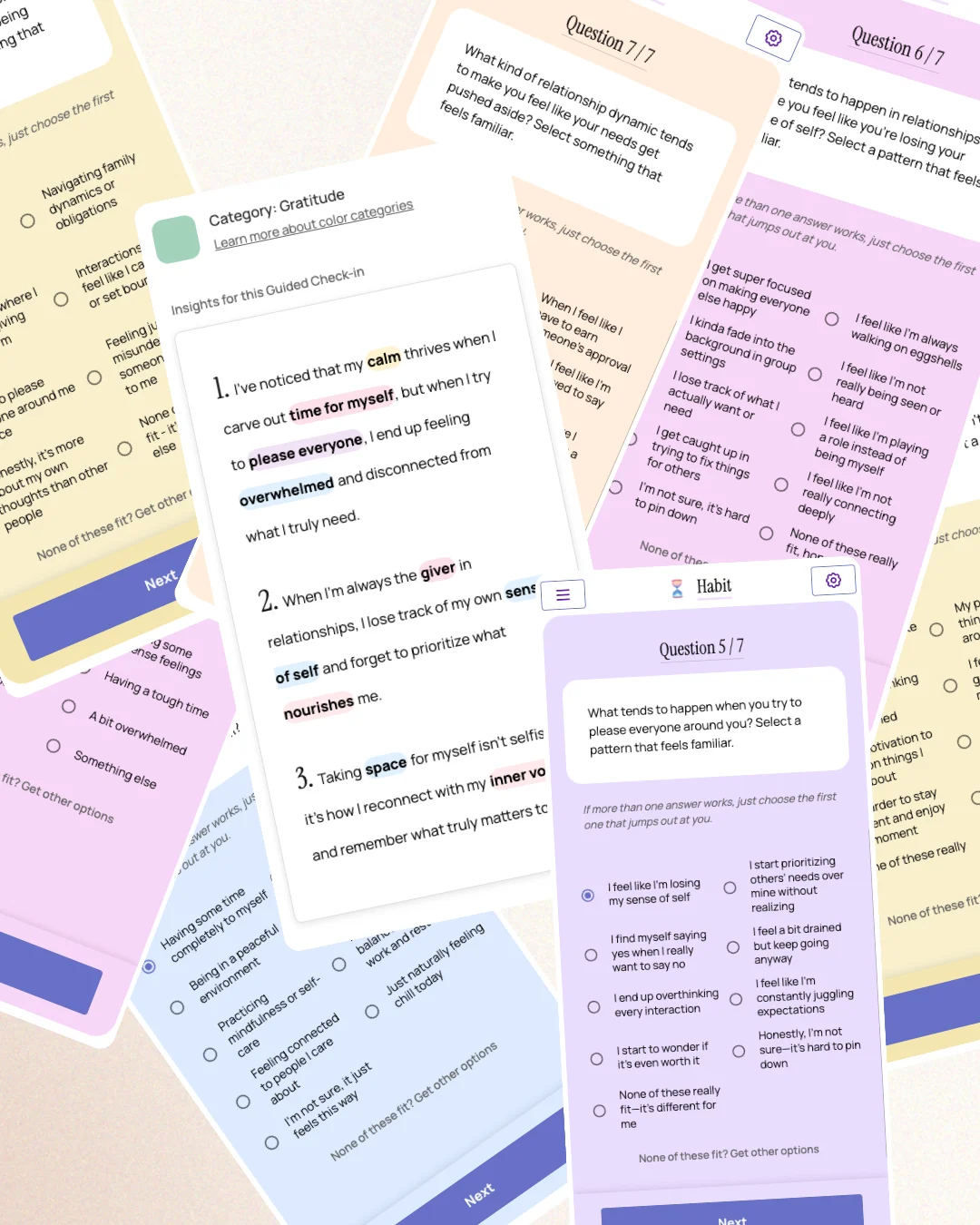
The app addresses a fundamental problem: traditional journaling asks you to face blank pages and figure out what to say. For many people—especially those with anxiety, ADHD, or decision fatigue—this creates a barrier that is too high to overcome. Habit lowers it with prompts drawn from a library of 1,100+ across categories like gratitude, growth, relationships, and creativity—and for days when even a prompt feels like too much, guided check-ins turn reflection into a few quick, tappable questions.
There are no streaks, no guilt, and no subscription—Habit is free for everyone. A days-journaled tracker rewards consistency without pressure, and AI trends across your whole journal are in development. The design is grounded in cognitive load theory and journaling research, making reflection accessible to everyone regardless of writing experience or mental state.
• People who have tried journaling but couldn't stick with it
• Those who feel overwhelmed by blank pages or open-ended prompts
• Individuals with anxiety, ADHD, or decision fatigue who benefit from structured guidance
• Busy people who need something quick that still feels meaningful
• Anyone who wants emotional regulation tools without the pressure of daily streaks or perfection
• People seeking support between therapy sessions
• People who want a rich, long-form writing editor (Habit keeps entries intentionally short and simple)
• Those seeking a replacement for professional mental health services (Habit is a tool, not therapy)
• Users who want extensive customization or complex features (Habit prioritizes simplicity)
• Prompts, not blank pages: The biggest barrier to journaling is removed. One fresh prompt each day, with the option to choose another from a library of 1,100+ across 22 categories means there's always something to write about.
• Short counts: A line or two is a complete entry. The app is designed for small, honest moments that compound into a real journal—not for producing polished essays.
• No pressure philosophy: There are no streaks to maintain, no daily requirements, and no guilt. The days-journaled tracker recognizes showing up without punishing missed days.
• Two ways to reflect: Writing prompts when you want to write, guided check-ins when you don't—quick tappable questions for the days even a prompt feels like too much.
• Free: Habit is free for everyone — daily journal prompts, guided check-ins, and full journal history at no cost.
• Science-backed design: Built using cognitive load theory, progress principles, and journaling research. The approach prioritizes emotional capacity and reduces friction at every step.
Sarah is a parent of two young children. Her evenings used to include 30 minutes of journaling, but that ritual became impossible when kids entered the picture. Now she opens Habit after putting the kids to bed, picks the prompt that matches her mood, and writes two honest lines. On the exhausting nights, she taps through a guided check-in instead—and it still counts.
Marcus has ADHD and finds traditional journaling overwhelming. The blank page triggers decision fatigue, and he often abandons journaling attempts after a few days. With Habit, the prompt is already there waiting—he writes a line or two during his commute, and his saved entries give him a record of his days without the pressure of a streak.
Emma sees a therapist biweekly but wanted a way to process emotions between sessions. She uses Habit's prompts to write short entries when she feels anxious or overwhelmed. Reading back through her journal helps her spot triggers and patterns, which she then discusses with her therapist. The app serves as a bridge between sessions, not a replacement for professional support.
After experiencing burnout, David needed a gentle way to rebuild a reflective practice. Traditional journaling felt too intense, but he knew reflection was important for recovery. Habit's one-line entries felt manageable—he could write a single honest sentence even on days when he felt mentally exhausted. Over time, the days-journaled tracker showed his consistency quietly improving.
Lisa tried journaling multiple times but always stopped because she felt her entries weren't "good enough." The pressure to write something profound made the practice feel like a chore. With Habit, a single line counts as a complete entry—and nobody's grading it. She can journal when it feels right, skip days without guilt, and still build a sustainable practice that helps her understand herself better.
Launched and publicly available
Progressive Web App (PWA) - Available on Web, iOS, and Android. Users can access via browser or install as a native app on their devices.
Based in Los Angeles, CA
Noemi Titarenco
• "Habit: The Journaling App That Removes the Blank Page Problem"
• "How One Founder Built a Journaling App for People Who Can't Stick with Journaling"
• "One Line a Day: The Journaling App for People Who Can't Stick with Journaling"
• "Habit Makes Journaling Accessible to People with ADHD, Anxiety, and Decision Fatigue"
• "The LA-Based App That's Rethinking How We Reflect on Our Lives"
• "One Prompt a Day: How Habit Solved the Blank Page Problem"
• "From Parent Burnout to Product: The Story Behind Habit's Prompt Journaling"
When writing about Habit, use clear, grounded language that prioritizes emotional clarity and credibility over marketing hype. The product was born from a real personal need, and that authenticity should come through in how it's described.
• "Prompt journaling" or "a daily journal with prompts" (not "AI-powered journaling" unless the AI aspect is specifically relevant)
• "Guided check-ins" (the optional no-writing mode) or "guided reflection"
• "Accessible" or "removes barriers" (focus on who it helps, not just what it does)
• "Reflection tool" or "practice" (not "solution" or "cure")
• "Entries" or "entries in your journal" (the core output) rather than "sessions"
• "Revolutionary," "cutting-edge," or "game-changing" (too promotional)
• "AI-powered" as the primary descriptor (the AI is a means, not the message)
• "Replaces therapy" or "mental health solution" (Habit is a tool, not a replacement for professional care)
• "Perfect for everyone" (be specific about who it helps)
• Overly technical jargon about the underlying technology (focus on the experience, not the implementation)
The story is about making reflection accessible to people who need it but have been excluded by traditional approaches. Keep that human-centered focus at the center of any coverage.
Free Resources
For Professionals
© 2026 Habit. All rights reserved.
Build version: v3.0.0