Think of one thing you enjoy about your work. Write it down. Then explore: Why do I enjoy it? What values does it connect to? How does it make me feel? Then think of another thing you enjoy. Write about how they connect to your values.
 HabitHabit
These deep dive journal prompts are designed to help you reflect on career or work in a way that fits your schedule and energy level. Research shows that even brief, structured reflection can reduce anxiety, improve emotional regulation, and help you recognize patterns in your thoughts and feelings over time.
Dive deeper with these prompts when you want to sit with your thoughts for longer.
💡 Want to explore different topics? Use the Journal Prompts Generator to get a random prompt based on the topic and time commitment.
Think of one thing you enjoy about your work. Write it down. Then explore: Why do I enjoy it? What values does it connect to? How does it make me feel? Then think of another thing you enjoy. Write about how they connect to your values.
Think of one challenge you're facing at work. Write it down. Then explore: What is the challenge? What strategies have I tried? What haven't I tried? What resources could help? Then write about what strategies would help you address it.
Think of one goal you have for your career. Write it down. Then explore: Why is this important? How does it align with my life goals? What would achieving it mean? Then write about how this goal aligns with your broader life goals.
Think of one skill you want to develop at work. Write it down. Then explore: Why this skill? How will I develop it? What will I use it for? How does it support my career growth? Then write about how this skill supports your career growth.
Think of one thing that motivates you in your work. Write it down. Then explore: How does it motivate me? When does it motivate me most? How can I cultivate more of this? Then write about how you can cultivate more motivation.
Think of one relationship at work that matters to you. Write about it. Then explore: Why does it matter? How can I nurture it? What would meaningful connection look like? Then write about how you can nurture this relationship.
Think of one thing you're learning in your work. Write it down. Then explore: What am I learning? How am I learning it? How does it support my growth? What will I do with this learning? Then write about how learning supports your growth.
Think of one dream you have for your career. Write it down. Then explore: Why this dream? What would it mean to achieve it? What's one step I could take? What comes after that step? Then write about what steps you can take toward it.
Think of one thing you're grateful for about your work. Write it down. Then explore: Why am I grateful? How does gratitude affect my experience? What would work be like without this? Then write about how gratitude affects your work experience.
Think of one change you want to make in your work. Write it down. Then create a plan: What exactly will change? What's the first step? What might get in the way? How will I handle obstacles? Then write about how to approach this change.
Think of one strength you bring to your work. Write it down. Then explore: How do I use this strength? How could I use it more? Where would it be most valuable? Then write about how you can leverage this strength more.
Think of one type of support you need at work. Write it down. Then explore: What support do I need? Who could provide it? How can I ask for it? What would asking look like? Then write about how you can ask for this support.
Think of one boundary you want to set at work. Write it down. Then explore: What is the boundary? Why is it important? How will I communicate it? How will I maintain it? Then write about how this boundary supports your well-being.
Think of one way you want to grow in your career. Write it down. Then explore: Why this growth? What resources would help? What do I need to learn? Who could help? Then write about what resources would help you grow.
Think of one accomplishment you're proud of at work. Write it down. Then explore: Why am I proud? What values does it connect to? What strengths did I use? How does it fit into my larger story? Then write about how it connects to your values.
Write about your definition of a 'good day' at work. What happens? Who do you interact with? What do you create or solve? How do you feel? Then compare it to your actual average workday. What's the gap? What's one change — in your role, habits, or environment — that would close it?
Think of one time you felt truly competent at work. Write about: What were you doing? What skills were you using? What feedback did you receive? How did it feel? What conditions made this possible? How can you create more of these conditions?
Write about a professional failure or setback. What happened? What did you learn? How did you recover? What would you do differently? How has this experience made you more resilient? What advice would you give someone facing a similar setback?
Think of your work identity — how you describe yourself professionally. Write about: Is this identity still accurate? Is it limiting? Does it reflect who you are or who you used to be? What identity would feel more aligned with where you're headed?
Write about work-life integration — not balance, but integration. Where do work and life blend well? Where do they collide? What boundaries do you need? What flexibility do you want? What would a week look like if work and life supported each other instead of competing?
Think of one person you admire professionally. Write about: What do they do? What qualities do they have? What decisions have they made? How do they handle challenges? What specific thing could you emulate starting this week?
Write about your relationship with recognition. Do you need external validation? Does praise motivate you or make you uncomfortable? When do you feel most appreciated? What would it look like to develop more internal validation for your work?
Think of one project or task you dread. Write about: What specifically do you dislike? Is it the task itself, the people involved, the context, or something else? What would make it tolerable? What would make it energizing? Is there a way to delegate or redesign it?
Write about your career five years from now — the version you're excited about, not the version you fear. What are you doing? Who are you helping? What have you mastered? What risks did you take to get there? What is one step you can take this month toward that vision?
Think of one belief you hold about work that might not be true. Examples: 'I have to be available 24/7,' 'Hard work always gets recognized,' or 'I can't change careers now.' Write about: Where did this belief come from? Is it serving you? What would you try if it weren't true?
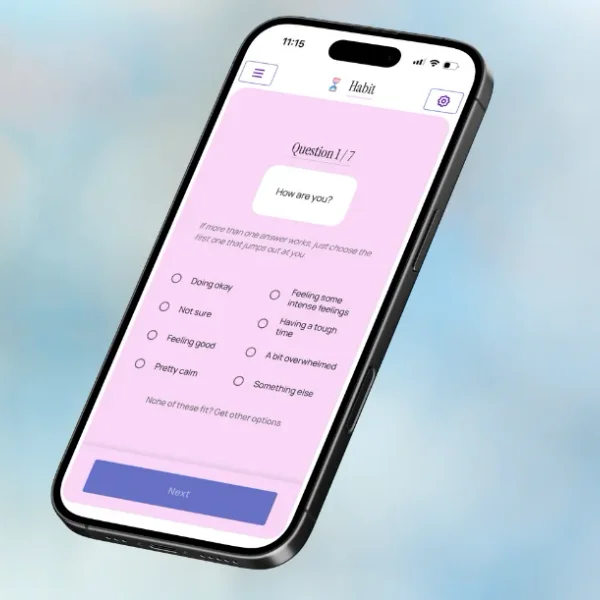
Don't have the mental capacity to write this out?
You can check-in with yourself without fighting the blank page. Answer 7 personalized multiple-choice questions instead.

Research shows that regular journaling can reduce anxiety by up to 20%, improve emotional regulation, and enhance self-awareness. Structured reflection practices activate the prefrontal cortex, helping you pause before reacting and build better metacognitive skills over time.

The most effective journaling practice is the one you'll actually maintain. Studies show that brief, consistent reflection (even just 2-3 minutes) produces better long-term outcomes than occasional long writing sessions. The key is finding a method that fits your energy level and schedule.

Structured prompts reduce cognitive load and help you focus when your mind feels scattered. Guided journaling is especially helpful for reducing overwhelm, building habits, and processing emotions systematically. Freeform writing works best when you have specific emotions to process or need creative expression.

Deep reflection requires intentional time and space. Schedule it when you have mental energy, perhaps after work or on weekends. Creating a quiet environment helps you explore thoughts more thoroughly and gain meaningful insights.

Deeper reflection sessions help you process complex emotions, gain clarity on challenging situations, and develop stronger self-awareness. Taking time to explore your thoughts thoroughly can lead to breakthrough insights and better decision-making.

Deep reflection is powerful for processing, but don't underestimate the value of quick daily check-ins. Combining both approaches—quick daily awareness and occasional deep dives—creates a well-rounded reflection practice.
Free Resources
For Professionals
© 2026 Habit. All rights reserved.
Build version: v2.18.7