Think of one memory that makes you smile. Write about it in detail. Then think of another. Write about: What do they have in common? What makes them make me smile? What patterns do I notice? Then write about what they have in common.
 HabitHabit
These deep dive journal prompts are designed to help you reflect on memory prompts in a way that fits your schedule and energy level. Research shows that even brief, structured reflection can reduce anxiety, improve emotional regulation, and help you recognize patterns in your thoughts and feelings over time.
Dive deeper with these prompts when you want to sit with your thoughts for longer.
💡 Want to explore different topics? Use the Journal Prompts Generator to get a random prompt based on the topic and time commitment.
Think of one memory that makes you smile. Write about it in detail. Then think of another. Write about: What do they have in common? What makes them make me smile? What patterns do I notice? Then write about what they have in common.
Think of one childhood memory that stands out. Write about it in detail. Then explore: What happened? Who was there? How did it feel? How did this memory shape who I am? What did I learn from it? Then write about how this memory shaped you.
Think of one moment you want to remember forever. Write about it in detail. Then explore: What happened? Why does it matter so much? What would I lose if I forgot it? How can I preserve it? Then write about why this moment matters so much.
Think of one memory that taught you something. Write about it. Then explore: What happened? What did I learn? How has this lesson guided me? What would I tell my past self? Then write about what lessons this memory holds.
Think of one memory you're grateful for. Write about it. Then explore: Why am I grateful? How does remembering it affect me now? What does it remind me of? Then write about how grateful memories affect your present.
Think of one memory that shaped who you are. Write about it. Then explore: What happened? How did it shape me? What values does it connect to? How does it influence my choices? Then write about how this memory connects to your values.
Think of one memory that brings you joy. Write about it. Then explore: What brings the joy? How does remembering it help me? When do I need to remember it? Then write about how joyful memories support your well-being.
Think of one memory you want to revisit. Write about it as you remember it now. Then explore: What would I notice differently now? What would I understand better? What questions would I have? Then write about what you'd notice differently now.
Think of one memory that makes you proud. Write about it. Then explore: Why am I proud? How does this pride connect to growth? What did this moment teach me about myself? Then write about how pride in memories connects to growth.
Think of one memory that connects you to others. Write about it. Then explore: Who else was there? What makes it shared? How does sharing memories strengthen bonds? Then write about how shared memories strengthen relationships.
Think of one memory that inspires you. Write about it. Then explore: What inspires me about it? How does it fuel action? What would I do because of this inspiration? Then write about how inspiration from memories fuels action.
Think of one memory that reminds you of your strength. Write about it. Then explore: What strength does it remind me of? How can I use this memory when I need strength? Then write about how strength memories support resilience.
Think of one memory that brings you peace. Write about it. Then explore: What brings the peace? How can I access this feeling? When do I need to remember this? Then write about how peaceful memories help you find calm.
Think of one memory you want to share. Write about it. Then explore: Why do I want to share it? Who would I share it with? What would sharing create? Then write about how sharing memories creates connection.
Think of one memory that makes you feel loved. Write about it. Then explore: What made me feel loved? How does this memory remind me of my worth? What can I learn from it? Then write about how love memories remind you of your worth.
Think of one photograph you wish existed but doesn't — a moment you remember vividly but was never captured. Write about: What is the moment? Who is there? What is happening? What does the light look like? Why does this unphotographed moment matter so much?
Write about a meal that holds meaning — not just any meal, but one connected to a person, place, or transition. What was it? Who prepared it? Who shared it? What were you celebrating or mourning? How does the memory of this meal hold the memory of the moment?
Think of one object you've kept for years that others might consider worthless. Write about: What is it? Where did it come from? Why have you kept it? What would you lose if you lost it? What does keeping it say about what you value?
Write about a version of yourself from a specific age — 8, 14, 21, or any age that stands out. What was important to you then? What were you afraid of? What did you hope for? What would that younger version of you think of who you are now? What would you want to tell them?
Think of one place you've lived that shaped you. Write about: What did the space look like? What sounds did you hear? Who came and went? What happened there? How did the physical environment shape who you were becoming?
Write about a goodbye you didn't get to say properly — to a person, a place, a phase of life, or even a version of yourself. What would you have said? What do you still need to express? How has the lack of closure affected you? What would healing look like?
Think of one season of your life — a specific year or period. Write about: What was happening externally? What was happening internally? What music were you listening to? What were you reading? Who were your people? How do you feel about that season now?
Write about a mistake you made that you now understand differently. What happened? What did you believe about it then? What do you understand now? How has time and experience reframed it? What would you say to someone making a similar mistake today?
Think of one person who knew you during a time of transition. Write about: What transition were you in? How did they see you? What did they reflect back to you about yourself? How did their presence help you navigate the change? Do they know the impact they had?
Write about a recurring dream or memory that visits you. What happens? When does it appear? What emotions does it bring? What might it be trying to tell you? Is there something unresolved that this memory keeps returning to? What would it take to let it rest?
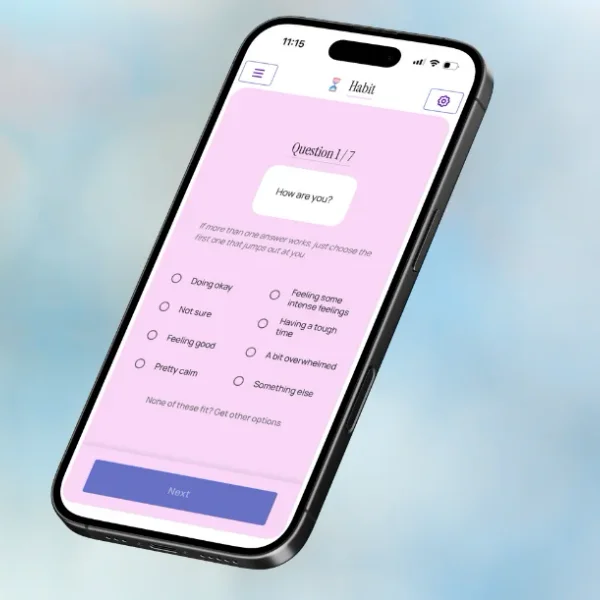
Don't have the mental capacity to write this out?
You can check-in with yourself without fighting the blank page. Answer 7 personalized multiple-choice questions instead.

Research shows that regular journaling can reduce anxiety by up to 20%, improve emotional regulation, and enhance self-awareness. Structured reflection practices activate the prefrontal cortex, helping you pause before reacting and build better metacognitive skills over time.
The most effective journaling practice is the one you'll actually maintain. Studies show that brief, consistent reflection (even just 2-3 minutes) produces better long-term outcomes than occasional long writing sessions. The key is finding a method that fits your energy level and schedule.

Structured prompts reduce cognitive load and help you focus when your mind feels scattered. Guided journaling is especially helpful for reducing overwhelm, building habits, and processing emotions systematically. Freeform writing works best when you have specific emotions to process or need creative expression.

Deep reflection requires intentional time and space. Schedule it when you have mental energy, perhaps after work or on weekends. Creating a quiet environment helps you explore thoughts more thoroughly and gain meaningful insights.
Deeper reflection sessions help you process complex emotions, gain clarity on challenging situations, and develop stronger self-awareness. Taking time to explore your thoughts thoroughly can lead to breakthrough insights and better decision-making.

Deep reflection is powerful for processing, but don't underestimate the value of quick daily check-ins. Combining both approaches—quick daily awareness and occasional deep dives—creates a well-rounded reflection practice.
Free Resources
For Professionals
© 2026 Habit. All rights reserved.
Build version: v3.0.0