Think of one way you've grown in the past year. Write it down. Then explore: What was I like before? What changed? What caused the growth? Then think of another way you've grown. Write about how they connect to each other.
 HabitHabit
These deep dive journal prompts are designed to help you reflect on personal growth in a way that fits your schedule and energy level. Research shows that even brief, structured reflection can reduce anxiety, improve emotional regulation, and help you recognize patterns in your thoughts and feelings over time.
Dive deeper with these prompts when you want to sit with your thoughts for longer.
💡 Want to explore different topics? Use the Journal Prompts Generator to get a random prompt based on the topic and time commitment.
Think of one way you've grown in the past year. Write it down. Then explore: What was I like before? What changed? What caused the growth? Then think of another way you've grown. Write about how they connect to each other.
Think of one change you've made in yourself. Write it down. Then explore: What motivated this change? What was the catalyst? What did I want to achieve? How has it changed me? Then write about what motivated this change.
Think of one lesson you've learned. Write it down. Then think of another lesson. Write about: How do they connect? How do they guide me? What bigger understanding do they form? Then write about how lessons interconnect to guide you.
Think of one insight you've gained. Write it down. Then think of another insight. Write about: How do they connect? What bigger understanding do they form together? How do insights build on each other? Then write about how insights connect to form deeper understanding.
Think of one pattern you've noticed in yourself. Write it down. Then explore: Is this pattern helpful or limiting? Do I want to change it? How would changing it help? Then write about which patterns you want to change and why.
Think of one strength you've developed. Write it down. Then explore: How did I develop it? How do I use it? How could I use it more? Where would it be valuable? Then write about how you can use this strength more.
Think of one belief you've shifted. Write it down. Then explore: What was the old belief? What's the new belief? What opened new possibilities? How has this change affected me? Then write about how changing beliefs opens new possibilities.
Think of one skill you've improved. Write it down. Then explore: How did I improve it? How does it support my growth? What other skills does it connect to? Then write about how this skill supports your growth.
Think of one habit you've built. Write it down. Then think of another habit. Write about: How do they work together? How do they support each other? What happens when I do both? Then write about how habits work together to support you.
Think of one boundary you've set. Write it down. Then explore: Why did I set it? How does it support my growth? What would happen without it? Then write about how boundaries support your growth.
Think of one value you've clarified. Write it down. Then explore: What does this value mean to me? How does it guide my choices? What choices has it influenced? Then write about how this value guides your choices.
Think of one relationship you've improved. Write about it. Then explore: How did I improve it? How did this help me grow? How does relationship growth support personal growth? Then write about how relationship growth supports personal growth.
Think of one fear you've faced. Write about it. Then explore: What was the fear? How did I face it? What did I learn? How did this build courage? Then write about how facing fears builds courage.
Think of one dream you're pursuing. Write it down. Then explore: Why this dream? What values does it connect to? How does it connect to my purpose? Then think of another dream. Write about how they connect to your purpose.
Think of one way you want to continue growing. Write it down. Then create a plan: What growth do I want? What would support it? What steps can I take? What resources do I need? Then write a concrete plan for supporting this growth.
Write about the gap between who you are and who you want to be. Pick one specific area. What does the gap look like? What creates it? What would closing it require? What is one tiny, repeatable action that would start closing it this week?
Think of one habit you want to build and one you want to break. Write about: How are they connected? Does one trigger the other? What environment supports the good habit? What environment supports the bad one? How can you redesign your environment to make the good habit easier?
Write about a belief you held five years ago that you no longer hold. What was it? What changed your mind? Who or what influenced you? How did letting go of this belief change your behavior? What belief might you hold now that your future self will let go of?
Think of one compliment you've received that was hard to accept. Write about: What was said? Why was it hard to hear? What did it reveal about how you see yourself? What would it mean to truly believe it? How would your life change if you internalized this positive view?
Write about your inner narrative — the story you tell yourself about who you are. Is it a hero's journey, a tragedy, a comedy, or something else? Who wrote this story? What chapters would you rewrite? What would the next chapter say if you were the author?
Think of one fear of success you might have. Write about: What would success actually look like? What would change? What might you lose? Who might be uncomfortable with your growth? What does this fear protect you from? What would happen if you succeeded anyway?
Write about a time you chose discomfort over comfort and grew because of it. What was the choice? What made it hard? What did you learn? Who did you become? How can you intentionally seek healthy discomfort to continue growing?
Think of one role model and the specific quality you admire in them. Write about: What is the quality? When do they demonstrate it? How could you practice this quality in small ways this week? What would be different in your life if this quality became part of who you are?
Write about your relationship with 'enough.' When do you feel like you are enough? When do you feel like you aren't? What standard are you measuring yourself against? Is it yours or someone else's? What would it mean to believe you are enough right now, as you are?
Think of one way you've grown that surprised you — not the growth you planned, but the growth that happened unexpectedly. Write about: What was the catalyst? How did you resist or accept it? What did you lose? What did you gain? How has this unexpected growth shaped your path?
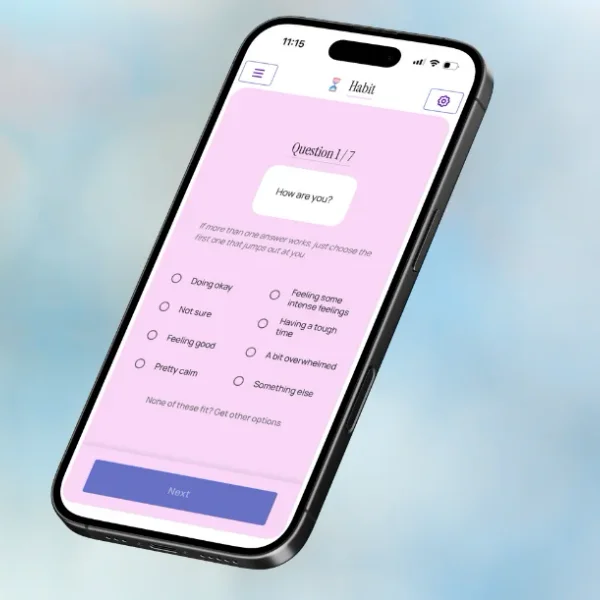
Don't have the mental capacity to write this out?
You can check-in with yourself without fighting the blank page. Answer 7 personalized multiple-choice questions instead.

Research shows that regular journaling can reduce anxiety by up to 20%, improve emotional regulation, and enhance self-awareness. Structured reflection practices activate the prefrontal cortex, helping you pause before reacting and build better metacognitive skills over time.

The most effective journaling practice is the one you'll actually maintain. Studies show that brief, consistent reflection (even just 2-3 minutes) produces better long-term outcomes than occasional long writing sessions. The key is finding a method that fits your energy level and schedule.

Structured prompts reduce cognitive load and help you focus when your mind feels scattered. Guided journaling is especially helpful for reducing overwhelm, building habits, and processing emotions systematically. Freeform writing works best when you have specific emotions to process or need creative expression.

Deep reflection requires intentional time and space. Schedule it when you have mental energy, perhaps after work or on weekends. Creating a quiet environment helps you explore thoughts more thoroughly and gain meaningful insights.

Deeper reflection sessions help you process complex emotions, gain clarity on challenging situations, and develop stronger self-awareness. Taking time to explore your thoughts thoroughly can lead to breakthrough insights and better decision-making.

Deep reflection is powerful for processing, but don't underestimate the value of quick daily check-ins. Combining both approaches—quick daily awareness and occasional deep dives—creates a well-rounded reflection practice.
Free Resources
For Professionals
© 2026 Habit. All rights reserved.
Build version: v3.0.0