The Power of Reflection: Growing with Intention
Most of us reflect without realizing it: replaying a conversation on the commute home, rehearsing a difficult email in the shower, or mentally listing what went wrong in a meeting. But unstructured rumination is not the same as structured reflection, and the difference matters for your mental health.
Research by psychologist James Pennebaker at the University of Texas at Austin, spanning four decades, found that expressive writing about emotionally significant experiences improves immune function, reduces doctor visits, and lowers symptoms of depression and anxiety (Pennebaker, 1997). The key variable was not the amount of writing, but the degree to which participants moved from raw emotion to structured meaning-making over successive sessions.
Self-reflection, when done with purpose and structure, moves you from autopilot to intentional living. The key is to learn from the past, not live in it.
Why Carve Out Time to Reflect?
Reflection offers tangible cognitive benefits backed by research:
- Pattern Recognition: A 2011 study by Masicampo and Baumeister found that the act of committing plans, worries, or goals to external storage (like a journal) reduces intrusive thoughts and frees up working memory for other tasks.
- Emotional Decompression: Pennebaker's research showed that translating emotions into language shifts activity from the amygdala (threat detection) to the prefrontal cortex (executive function), providing a literal "pressure valve" for stress.
- Strategic Clarity: A 2014 study by Kross et al. demonstrated that using your own name or third-person pronouns during self-reflection ("Why is Sam feeling this way?" instead of "Why am I feeling this way?") creates psychological distance that reduces emotional reactivity and improves decision-making.
3 Proven Reflection Techniques
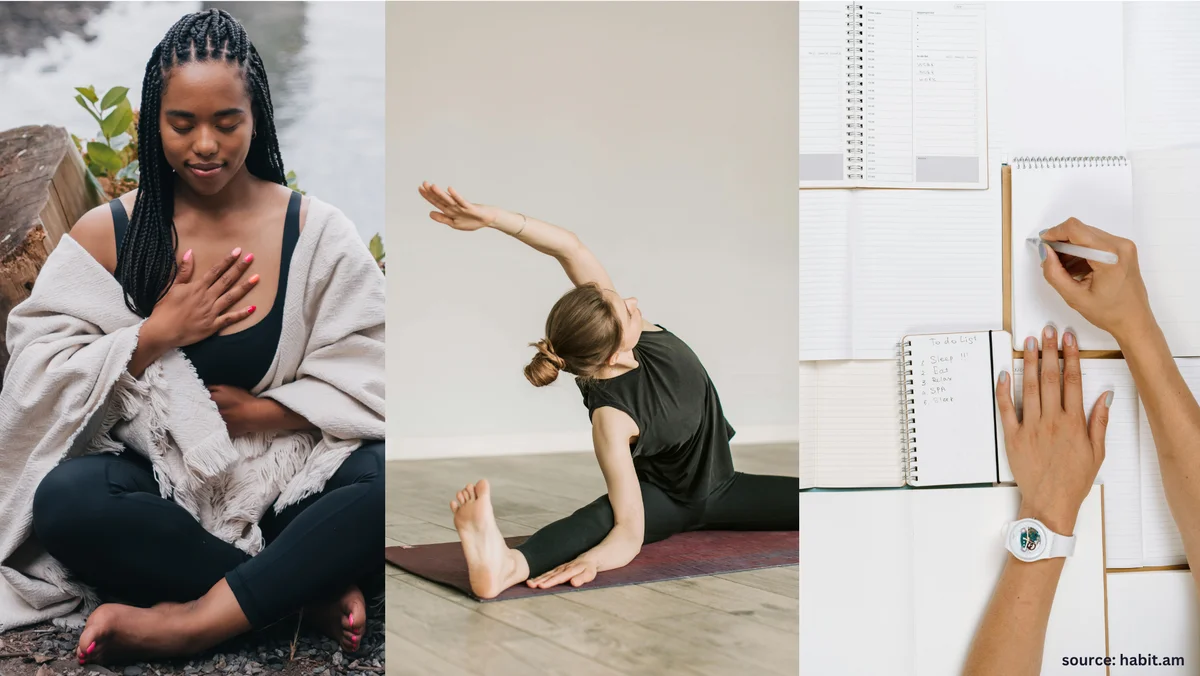
There is no single "right" way to reflect, but each technique has a distinct evidence base and best-use scenario.
1. Journaling
Journaling is one of the most studied forms of reflection because it creates a visible, revisable record of how you are evolving.
- The Evidence: Pennebaker's foundational studies showed that 15-20 minutes of expressive writing for 3-4 consecutive days produced measurable health benefits that persisted for months. A 2018 meta-analysis by Reinhold et al. confirmed these effects across 146 studies, with the strongest outcomes for trauma processing and stress reduction.
- How to Take Action: Don't worry about prose. Use bullet points or "The 5-Minute Method" (one thing you learned, one thing you're grateful for, and one thing to change). The research shows that consistency matters more than length.
RELATED: The Psychology of Journaling: Structured or Freeform , What Works Best?
2. Meditation: The Art of Stillness
While journaling is active and generative, meditation is receptive and observational. It builds the capacity to notice thoughts without immediately reacting to them.
- The Evidence: A landmark 2011 study by Hölzel et al. at Harvard Medical School found that eight weeks of mindfulness meditation increased gray-matter density in the hippocampus (learning and memory) and decreased it in the amygdala (stress response). More recent research by Golestani et al. (2022) showed that even brief daily meditation practice strengthens attentional control and emotional regulation.
- How to Take Action: Use a guided app for just five minutes. Your goal isn't to empty your brain, but to notice when it wanders and gently bring it back. Research by MacLean et al. (2010) showed that this "attentional training" improves sustained attention and reduces mind-wandering in daily life.
RELATED: New Global Study Finds 10 Minutes of Daily Self-Reflection for 30 Days Significantly Reduces Depression and Anxiety Symptoms
3. Social Reflection: The Mirror Effect
Sometimes we are too close to our own lives to see the truth. Social reflection involves seeking external feedback from mentors or trusted peers.
- The Evidence: Organizational psychologist Tasha Eurich's research on self-awareness found that people who actively seek feedback from others are significantly more accurate in their self-assessments than those who reflect in isolation. A 2015 study by Greguras and Diefendorff found that high-quality feedback-seeking behavior is associated with higher job performance and stronger relationships.
- How to Take Action: Ask a colleague, "What is one thing I could have done differently in that meeting?" The specificity of the question matters more than the frequency of asking.
Applying Reflection in the Real World
Reflection shouldn't stay in your notebook; it needs to show up in your life.
In Your Career
In professional settings, reflection often takes the form of Retrospectives or Post-Mortems.
- Individual: At the end of the week, ask:
"What was my biggest win, and what was my biggest mistake?"
- Team: After a project, discuss what went right and what should be changed. Research by Amy Edmondson at Harvard Business School shows that teams with high "psychological safety" — the belief that you won't be punished for mistakes — learn faster and perform better over time.
In Your Relationships
We often react to our partners or friends based on old triggers. Reflection allows you to "pause" before you react. Research by Finkel et al. (2013) found that couples who engaged in even brief reflective writing about conflicts reported higher relationship satisfaction and reduced aggression over time.
When Reflection Is Not Enough
Reflection is a powerful tool, but it is not a substitute for professional mental health care. If you are experiencing symptoms of clinical depression (persistent sadness, loss of interest in activities, changes in sleep or appetite lasting more than two weeks), anxiety disorders (panic attacks, persistent worry that interferes with daily functioning), or trauma (flashbacks, hypervigilance), structured reflection may help, but it should complement, not replace, therapy or psychiatric care.
The National Institute of Mental Health (NIMH) recommends seeking professional help if self-reflection practices do not produce improvement within a few weeks, or if symptoms worsen.
How to Make the Habit Stick
The biggest obstacle to reflection is the feeling that we are "too busy." But if you don't have ten minutes to think about your life, you're likely headed in a direction you didn't choose.
Five minutes is better than zero.
Consistency beats intensity every time. A 2020 study by Mrazek et al. found that brief but consistent mindfulness practice produced greater cognitive benefits than sporadic longer sessions.
Reflect while doing something you already do, like voice notes while walking your dogs.
Don't use reflection as a way to beat yourself up over mistakes. Treat your past self like a student you are gently coaching. Research by Neff (2003) on self-compassion shows that people who respond to their own failures with kindness, rather than self-criticism, are more motivated to improve and less likely to procrastinate.
Reflection is a journey, not a destination. It takes patience to build the habit, but the clarity you gain is the greatest competitive advantage you can have.
RELATED: Why is Journaling So Hard? The 'Mental Friction' No One Talks About
10 Prompts to Kickstart Your Practice
Here are specific reflection prompts you can try to get some of the benefits we chatted about earlier. They really help cut through the "surface level" and get to the heart of personal growth.
- The High/Low: What was the best moment of my day, and what was the most challenging? (You can replace day with a trip, job, project, or anything else you want to reflect on)
- The "Why" Audit: What did I spend the most time on today, and did it actually move me closer to my goals? For this one, it's key to be RUTHLESS!
- The Lesson: If I had to summarize what I learned today in one sentence for a student, what would the lesson be? Doing this daily is a great way to notice new skills you are building!
- The Trigger Check: What made me feel defensive or frustrated today? What does that reaction tell me about my current needs?
- The Perspective Shift: If I were the person I had a conflict with today, how would I describe our interaction?
- Energy Management: Which task or person energized me today, and which one drained me? (this is such a good check-in for burnout prevention!)
- The "Future Self" Lens: Would the person I want to be in five years be proud of the choices I made today?
- The Fear Factor: What am I avoiding right now, and what is the smallest step I can take to address it? (Sit in silence for a bit before approaching this one.)
- The Redundancy Test: If I had to cut 20% of my current commitments to be more effective, what would I let go of?
- The Gratitude Pivot: What is something I currently take for granted that I would miss if it were gone tomorrow?
Thanks for reading and happy reflecting! xo Sam