If you’ve ever wondered why some habits finally stick while others fade after three days, here’s a counterintuitive truth: sometimes consistency has nothing to do with willpower. It’s about something much simpler, almost embarrassingly basic.
It’s about seeing your calendar fill up.
And yes, that’s a real psychological effect.
Researchers call this a visual cue loop, and it taps into several well-documented cognitive mechanisms that make your brain feel rewarded long before the long-term benefits arrive. In the world of habit formation, getting your brain to want the next repetition is half the battle.
In this post, we’ll break down why visual habit tracking works, the research behind it, and how a simple check-in calendar can quietly transform your consistency.
The Strange Power of Visible Progress
Imagine for a moment that you’re trying to build a new habit , journaling, meditating, walking, anything. You’re doing it for your future self. But the future-self benefits don’t pay out yet. They pay out later. Much later.
Your present-day brain, however, needs something right now.
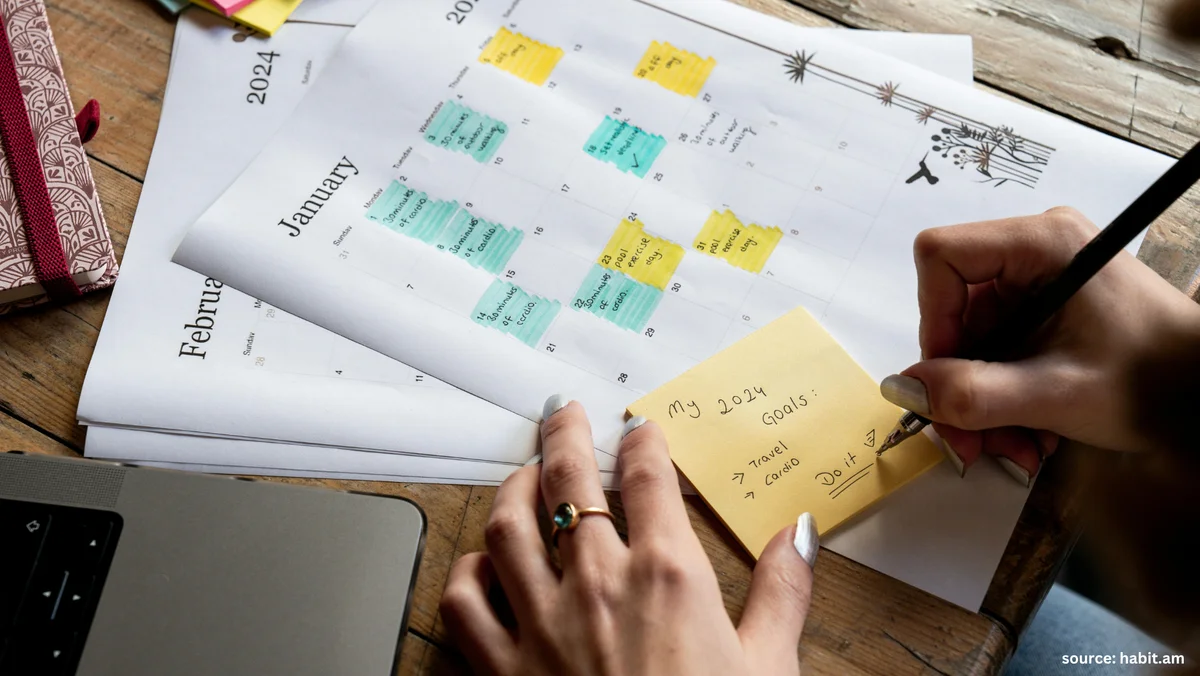
This is where visual tracking becomes powerful. When you mark a check-in and see it appear on your calendar, your brain interprets it as a “micro-win.” Neuropsychologists call these micro-rewards, and they’re essential for keeping short-term motivation alive.
The journal check-in you did today isn’t just a task completed. It’s a square filled. A streak extended. A pattern forming.
It's a signal to your brain: You’re someone who journals every day.
What the research actually says:
If you’re the kind of person who likes evidence, here’s the good news: scientists have studied why visual cues create consistency, and the findings are surprisingly unified.
1. Progress visibility boosts motivation
A 2011 study from the Harvard Business School on the “Progress Principle” found that even small, visible signs of progress significantly increase motivation and engagement. Your brain simply likes knowing it’s moving forward.
This is why a filled calendar works: it reduces the psychological distance between where you are and who you want to become.
2. Streaks trigger loss aversion
Behavioral economics research by Kahneman and Tversky on prospect theory shows that humans are more motivated by avoiding loss (Kahneman & Tversky, 1979) than by gaining something new. A filled calendar creates a streak , and breaking a streak feels like a loss. So your brain nudges you to continue.
3. Pattern recognition reinforces identity
Research on habit formation by Wendy Wood at USC demonstrates that repetition creates self-perception loops (Wood & Rünger, 2016). Seeing multiple check-ins neatly arranged on a calendar reinforces the belief: “I’m consistent.”
Identity-based habits are more durable than outcome-based habits. The calendar becomes a mirror reflecting a better version of you.
4. Visual cues reduce cognitive load
Research on cognitive load theory by Sweller shows that decision fatigue decreases (Sweller, 1988) when you rely on visual triggers rather than internal motivation. A filled calendar becomes an external reminder, reducing effort and friction.
You don’t think about the habit. You respond to the cue.
Why This Matters for Guided Check-Ins
Guided journaling doesn’t rely on paragraphs or inspiration. It uses short, structured questions that meet you exactly where you are. But even with simple journaling, staying consistent can be hard when life gets busy.
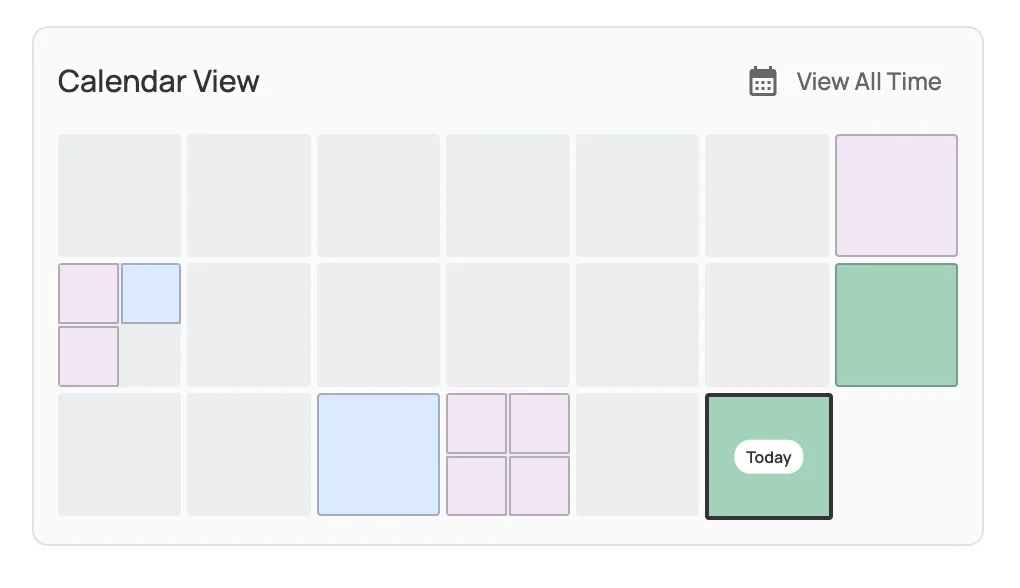
The calendar tracking widget inside Habit solves that invisibility problem.
It gives shape to your efforts.
Each check-in becomes a visible point on your timeline. Over a week, it becomes a pattern. Over a month, it becomes a story of how you showed up for your emotional world, even in small ways.
This isn’t about streaks for streaks’ sake. It’s about creating a feedback loop where reflection feels rewarding in the moment , not just in theory.
Try It With Your Next Week
For the next seven days, try this:
- Do a short guided check-in each day.
- Watch your calendar fill up , square by square.
- Notice how seeing progress changes how you feel about consistency.
If you want better habit consistency, don’t rely on motivation. Give your brain something it loves: visible progress. Seeing your calendar fill up is more than a satisfying visual , it's a science-backed way to stay consistent, one day at a time.