Not everyone has the same experience, so this isn't necessarily about why morning pages are bad for you. This is what I found (spoiler alert: it was not great.)
If you’ve ever seen TikToks with morning pages review typed on top of an almost-too-aesthetic video, you know they have an almost mythic reputation. This practice, popularized by Julia Cameron in The Artist’s Way, is often presented as the "holy grail" of creativity and mental health.
I decided to put those claims to the test. I didn’t just try it for a week; I committed to the full 12-week experiment exactly as the book prescribes.
(A lot of those reviews were done during the first few days. Let's just say things change when you're 70+ days deep into this.)
The verdict? They didn’t work for me in the way I expected, and they certainly aren't a sustainable daily ritual. I know they say that after 30 days of something, it "automatically" becomes a habit, but I kept pushing through with morning pages (and I'm glad I did) but I was 100% ready to stop doing them after the 12 weeks.
Still!! The experience was eye-opening. Here is the no-fluff reality of what happens when you write three pages every single morning.
TLDR; I don't recommend Morning Pages. I like reflection tools like Habit Guided Check-ins or classic bullet journaling with no length-requirement.
What are Morning Pages? (The Artist’s Way Method)
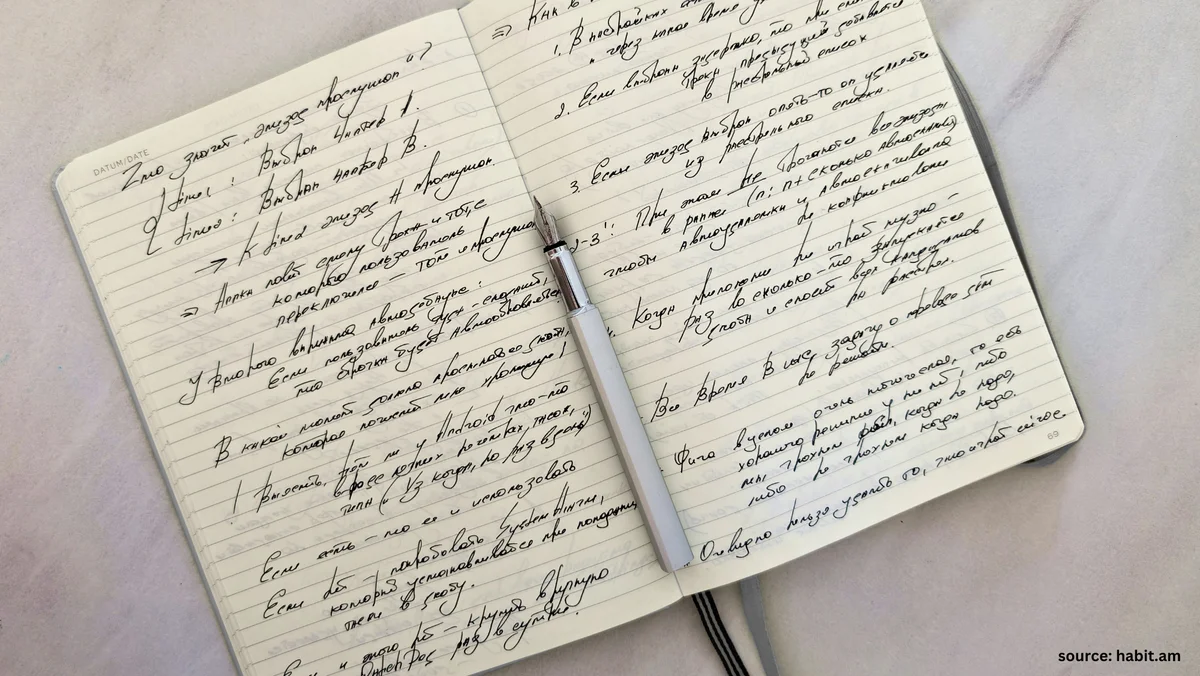
If you are new to this concept, Morning Pages are three pages of longhand, stream-of-consciousness writing done first thing in the morning.
The goal isn't "good" writing. In fact, they are meant to be private and even nonsensical. The idea is to "drain the brain" of the morning's mental clutter so you can approach your creative work with a clean slate.
The Promised Morning Pages Benefits:
- Silencing the Inner Critic: By writing fast and without a filter, you bypass the "editor" in your head.
- Mental Clarity: Getting your anxieties and to-do lists out of your brain and onto paper.
- Creative Breakthroughs: Allowing deep-seated ideas to bubble up to the surface.
My Morning Pages Review: The Reality of a 12-Week Experiment
When I first started, I loved the feeling of dumping out my brain in the morning, but somewhere (around half way through?) I started to feel like the juice wasn't worth the squeeze. 🧃
Let me explain.
1. The Time Commitment: Are Morning Pages Worth It?
Writing three handwritten pages isn't a quick task. Depending on your speed, you are looking at 25 to 60 minutes. One time it took me 3 hours. 💀 I'm employed y'all, this quickly began to feel like a "chore" I had to finish rather than a ritual I looked forward to.
2. The Signal-to-Noise Ratio
I found that about 90% of my entries were "brain noise", lists of groceries, complaints about the weather, or recaps of weird dreams. While the occasional breakthrough happened, the effort required to get there often felt disproportionate.
3. The Unexpected Emotional Drain
Julia Cameron suggests that Morning Pages energize you. For me, it was the opposite. By excavating every minor frustration at 7:00 AM, I often started my day feeling emotionally emptied rather than inspired. Towards the end, I was making less art. It was becoming more and more difficult to kick off creative projects. I was tired.
Who Should Try the Morning Pages Method?
Despite my personal experience, this method has lasted for decades because it does work for certain people.
This method is for you if:
- You are in a deep creative block: The sheer volume of writing forces you to break through resistance.
- You have slow mornings: If you have an hour to yourself before starting work, the pace can be meditative.
- You are a long-form processor: Some people only find clarity through "writing it all out."
Why Morning Pages might not work for you:
- You tend to ruminate: If writing down negative thoughts makes you dwell on them rather than release them.
- You have ADHD or high "mental friction": The blank page and 40-minute time requirement can feel like an impossible barrier.
- You're not creatively blocked, you just want to journal for emotional regulation: There are much more managable and sustainable techniques that can help you regulate emotions.
My Sustainable Alternative: Guided Journaling
After 12 weeks, I realized I wanted the clarity of journaling without the exhaustion. A gentler alternative is a short, structured check-in: the Daily Mental Health Check-In printable gives you space to notice your mood, energy, body signals, needs, and one realistic next step—without the pressure to fill three pages.
3 Sentences of Freeform Writing + A Habit Guided Check-in.
| Feature | Morning Pages | Guided Habit Check-in |
|---|
| Time Needed | 30–40 Minutes | 2-5 Minutes |
| Format | 3 Pages (Longhand) | 7-Question Adaptive Flow |
| Friction | High (SO MUCH WRITING) | Low (No Writing) |
| Mental Load | Draining | Grounding |
By switching to an interactive 7-question flow, I get to the "Aha!" moments in 5 minutes. With Morning Pages, it can take me an hour and I might not even get an insight.
Final Verdict: Is it a Sustainable Practice?
My honest morning pages review is this: They are a fantastic "diagnostic tool" for a season of life, but they aren't the only way to be a creative or healthy person.
If they feel like a marathon you’re failing at, stop. The best journaling habit is the one you actually look forward to doing.
If morning pages is keeping you from reflecting because you feel like you can't fill up the full 3 pages, try a method designed to work with your brain, not against it.
RELATED: journal prompt generator