I need to make a confession to the internet.
I am a recovering Bullet Journal addict.
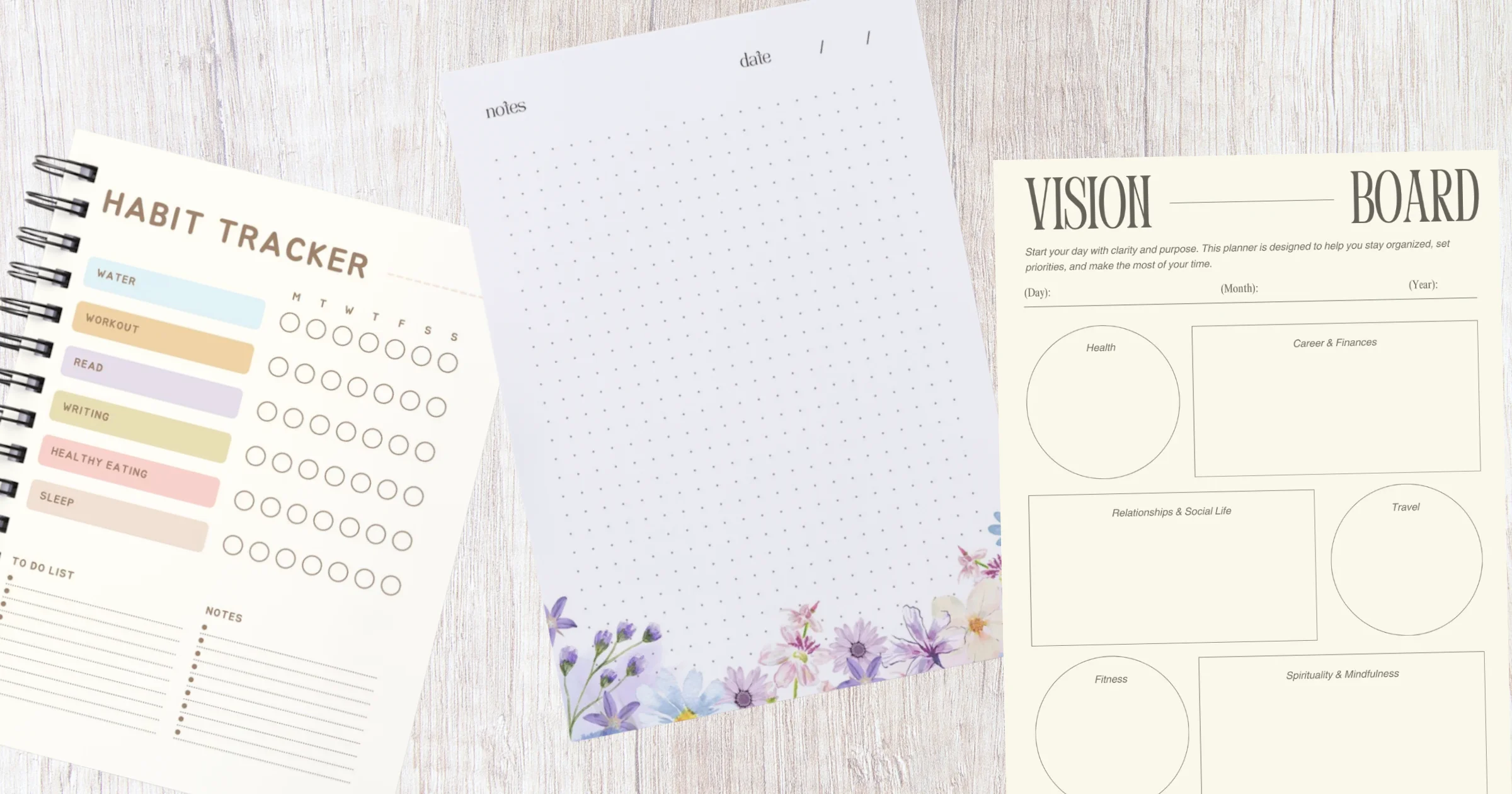
If you came to my house right now, I could open a specific drawer in my desk and show you the evidence:
- Three Leuchtturm1917 notebooks (two are 90% empty).
- A graveyard of Tombow dual brush pens.
- Washi tape in patterns I thought defined my "aesthetic" in 2019.
- Way too many cutesy rulers that I got off Temu (please don't judge me)
For a long time, I thought Bullet Journaling (BuJo) was the answer to my chaotic brain. I thought if I could just draw the perfect spread, my life would fall into the perfect grid.
But eventually, I quit. And honestly? It was the best thing I did for my mental health.
Here is the raw, unpretty truth about why my beautiful BuJo habit turned against me.
1. The "Pinterest Perfectionism" Trap
Let's be real: The original Bullet Journal method by Ryder Carroll is actually very simple and utilitarian. It's just lists and bullet points.
But that is not what Instagram told me Bullet Journaling was.
Social media convinced me that if my weekly spread didn't look like a hand-lettered masterpiece with watercolor illustrations of succulents, I wasn't doing it right.
I would sit down to plan my week, and instead of actually planning, I would spend 45 minutes trying to write the word "February" in calligraphy.
If I messed up a line? I wanted to burn the whole book.
The pressure to make my journal "beautiful" completely cannibalized the purpose of the journal, which was to be useful. I was performing organization, not actually being organized.
2. The "Back-Filling" of Shame
Here is a scenario you might recognize:
You are diligent for three weeks. You color in your little "Mood Tracker" mandala every night. You feel like a god of productivity.
Then, you get the flu. Or you have a crunch week at work.
You miss three days.
Now, you have three blank squares in your tracker. When you finally open the book again, you are faced with a choice:
- Leave them blank (and ruin the aesthetic).
- Try to remember how you felt on Tuesday (which is basically lying).
The journal became a chore. I found myself dreading opening it because I didn't want to face the "work" of catching up. I was essentially creating homework for my future self.
3. My Handwriting fluctuates with my Anxiety
This is the rawest part for me.
When I am calm, my handwriting is decent.
When I am stressed, overwhelmed, or anxious...
(aka the times I need journaling the most)
My handwriting looks like a spider fell into an inkwell and had a seizure. 🙃
So, during my lowest mental health moments, I would try to journal, see how ugly and chaotic my writing looked, and it would make me feel more chaotic.
My journal was reflecting my mess back at me, and I hated it.
4. The Data Trap
I loved the idea of tracking habits. I wanted to see the data: Does drinking more water actually make me happier?
But in a paper bullet journal, you can't cross-reference data easily. You have a sleep tracker on page 10 and a mood tracker on page 12. Unless you are manually flipping back and forth and building excel sheets in your brain, you aren't getting any insights.
You are just coloring in boxes.
Finding Peace in the Digital
I realized I didn't hate journaling.
I hated feeling like I had to be perfect.
I got tired of performing.
Honestly, maybe I grew out of it?
So I tried some digital journals, I tried the notes app, I ended up trying Habit (which is why I'm a contributor to this blog 💁♀️), and I found that there are many options out there.
If you're reading this and feel stressed about journaling, I want you to know that there is a better way.
Eventually I found myself back to a notebook journal that I doodle in regularly. For my daily journaling, I prefer digital now.
Try new things - step out of your comfort zone.
Leave the performance behind.
Start journaling for you.
RELATED: Why Journaling Feels So Hard (And Why It's Not Your Fault)