Journal Prompts Without Writing: 7 Powerful Ways to Reflect Without Picking Up a Pen
You don't need to write to journal. Here are 7 powerful wordless journaling options.

Loading content...
 Habit
HabitYou don't need to write to journal. Here are 7 powerful wordless journaling options.
"Journal Prompts Without Writing: 7 Powerful Ways to Reflect Without Picking Up a Pen" — Habit Blog — https://habit.am/blog/journal-prompts-without-writing

Community builder and wellness enthusiast who believes small daily practices create big changes. Taylor’s 'Small Habits' methodology has been implemented in corporate wellness programs at over 5,000 organizations.
View all articles by Taylor Morgan →
If the thought of writing paragraphs makes you avoid journaling altogether, you're not alone. Many people want the benefits of regular reflection but struggle with traditional writing methods.
The good news? Journaling doesn't require writing at all. In fact, some of the most powerful self-reflection practices happen without ever picking up a pen.
It's important to note here that the most important part of journaling is actually self reflection. What we're going to talk about here is ways to achieve self reflection, which is what actually brings you all the benefits of journaling.
Journaling is fundamentally about processing thoughts and emotions, not about creating written records. The medium is just a tool, and writing is only one option among many.
When you remove the writing requirement, you might actually find:
Record your thoughts using your phone's voice memo app. Many people find speaking feels more natural than writing.
How to start:
Platforms like Habit use multiple-choice questions that let you reflect without typing a single word. Simply select the options that resonate most.
Why it works:
Use photos to capture your daily experiences and emotional states. A picture can often express what words cannot.
Try this:
Express emotions through simple drawings, colors, or patterns. You don't need artistic skill, just willingness to create.
Simple approach:
Curate playlists that match your emotional state or create soundscapes that help you process feelings.
How it works:
Use physical movement to process emotions and thoughts. Your body often knows what your mind hasn't yet articulated.
Getting started:
Use AI chatbots or talk to a trusted friend about journal prompts. The act of articulating thoughts aloud can be profoundly clarifying.
Effective prompts:
Research by Pennebaker (1997) and Smyth et al. (2018) on expressive writing shows that the core benefits of journaling, emotional processing, self-awareness, and stress reduction, come from the act of reflection itself, not the writing medium. The cognitive processing happens whether you're speaking, moving, selecting options, or creating visuals.
Absolutely. Self-awareness comes from noticing your patterns over time, and any consistent reflection method will reveal these patterns. Many people actually develop deeper awareness through non-writing methods because they're more likely to practice consistently. Visually seeing patterns over time is a powerful way to build self-awareness.
Most non-writing methods have built-in review systems. Voice memos can be saved and revisited, digital platforms track your reflections automatically, and photos/art create visual timelines of your emotional journey. Many apps generate insights for each check-in that you can review and reflect on.
Yes. Journaling is about the process of self-reflection, not the format. If it helps you understand yourself better and process your experiences, it's valid journaling. The goal is self-awareness, not perfect written records.
Start with what feels most natural to you. If you enjoy talking, try voice memos. If you're visual, try photo journaling, junk journaling or doodle-journaling. The key is experimenting until you find what feels effortless and sustainable.

Our 2,000-person journaling study found that half of participants 55+ would try the AI-enabled reflection—four times the rate among younger participants.

Marc Andreessen's call for zero introspection mistakes rumination for self-knowledge. Lao Tzu, Sun Tzu, and Marcus Aurelius offer a more useful distinction.
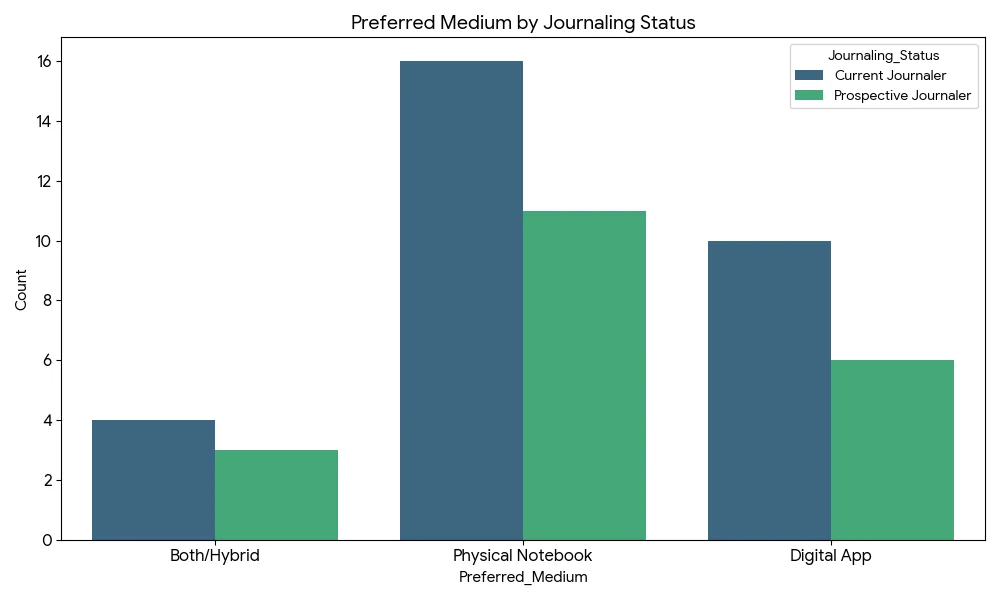
Daily journaling works best when you focus on consistency, not volume. Learn simple techniques to show up regularly and build a meaningful record over time.
Free Resources
For Professionals
© 2026 Habit. All rights reserved.
Build version: v3.0.0