Guided Journal Apps & Mental Health Tools: Best of 2026
Compare guided journal apps and interactive mental health tools for journaling, AI reflection, and mood tracking. Find the right fit for your brain.
Loading content...
 Habit
HabitCompare guided journal apps and interactive mental health tools for journaling, AI reflection, and mood tracking. Find the right fit for your brain.
"Guided Journal Apps & Mental Health Tools: Best of 2026" — Habit Blog — https://habit.am/blog/best-journal-apps-2026

Community builder and wellness enthusiast who believes small daily practices create big changes. Taylor’s 'Small Habits' methodology has been implemented in corporate wellness programs at over 5,000 organizations.
View all articles by Taylor Morgan →
We built Habit — so a short shameless-self promotion: Habit is a guided journal app that lets you check in through a personalized quiz and receive an insight, deeper analysis, a reflection, and more. It's free to try. Now let's get into the landscape of journaling and mental health apps.
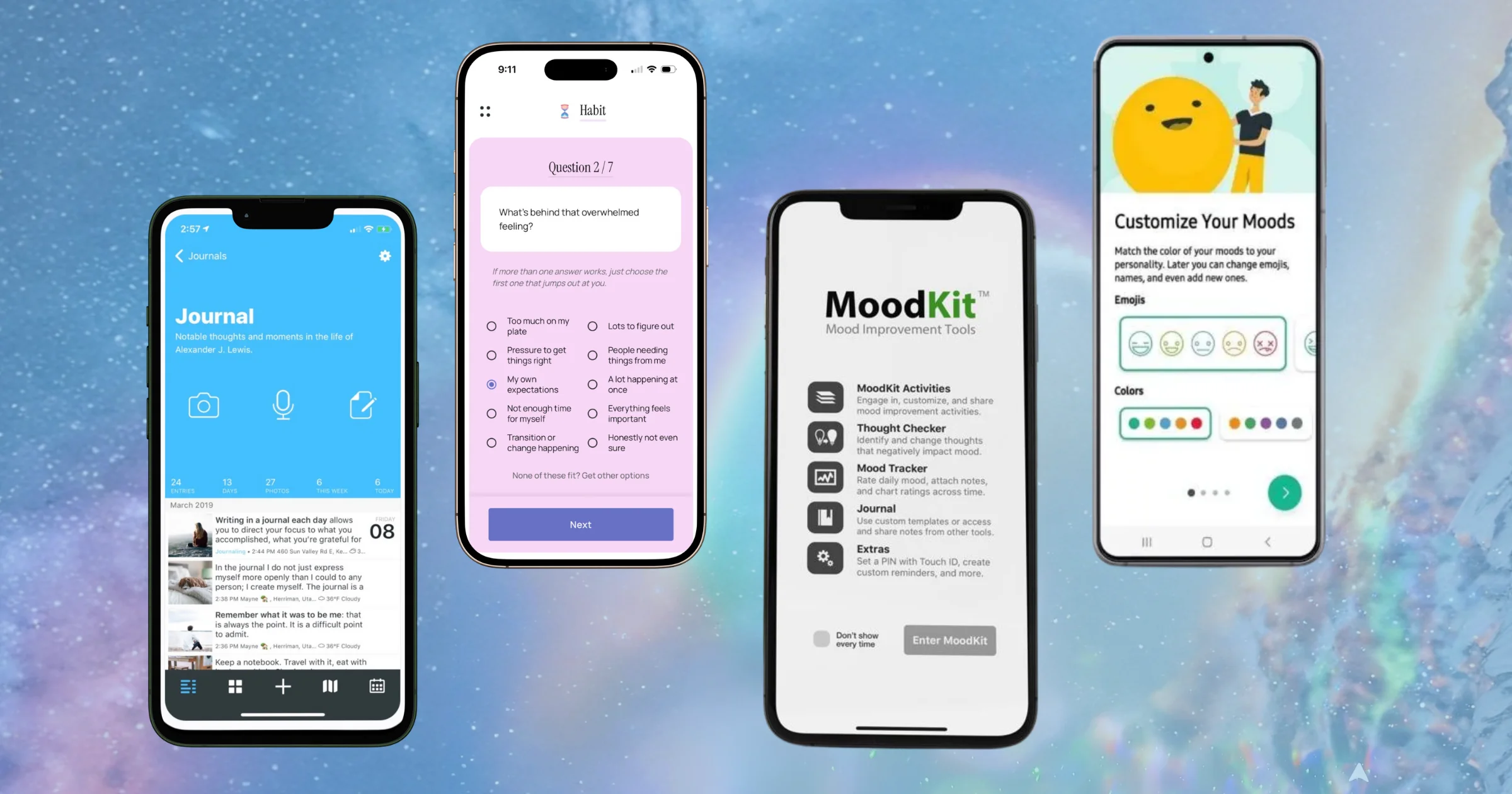
The right journaling app depends on what you actually need. Some people want a place to process anxiety. Others want AI that asks follow-up questions. Others just want to track mood without writing anything at all. Below are three quick listicles organized by use case, so you can find the best fit fast.
These apps are built around emotional awareness, patterns, and mental wellness rather than pure memory keeping.
Day One is the long-form journaling standard. It supports text, photos, locations, weather, tags, and encrypted storage. If you enjoy writing and want a rich record of your life, this is the strongest option.
Best for: People who like writing detailed entries and keeping memories.
What it offers:
MoodKit is built around Cognitive Behavioral Therapy (CBT) principles. Rather than just logging emotions, you identify thought distortions and work through structured exercises to reframe them.
Best for: People who want a more clinical, skill-building approach.
What it offers:
AI journaling apps use conversation and follow-up questions to make reflection feel less like writing and more like talking to someone who remembers what you said last time.
Reflectly feels like a chat. You write a short entry, and the app asks follow-up questions to help you explore what is underneath the surface. It also supports voice notes and gamifies the experience with streaks.
Best for: People who want a conversational, mobile-first journaling experience.
What it offers:
Rosebud combines AI with therapist-informed prompts to help you process emotions and situations. It is more targeted than open-ended chat journaling and often asks questions that push reflection deeper.
Best for: People who want AI journaling with a therapeutic framing.
What it offers:
Habit uses AI to turn your check-in responses into insights, analysis, and reflection prompts. Instead of generating generic advice, it works from what you actually shared and surfaces patterns you might miss on your own.
Best for: People who want AI-powered reflection without sacrificing privacy or structure.
What it offers:
Mood tracking apps focus on naming, rating, and visualizing emotion over time. They are ideal if your main goal is awareness and pattern spotting, not long-form writing.
Developed by researchers at Yale, Mood Meter plots your mood along two axes: energy and pleasantness. It helps build emotional granularity, which is the ability to name feelings precisely.
Best for: People who want a research-backed, visual way to label emotion.
What it offers:
How We Feel lets you select from a wide range of emotions and add context such as sleep, social activity, and stress. It is simple, fast, and good at spotting trends.
Best for: People who want a free, straightforward mood tracker with context.
What it offers:
eMoods is designed for people managing bipolar disorder, depression, or anxiety. It tracks mood, sleep, medication, and other factors with a clinical focus.
Best for: People who want a tracker they can share with a clinician or therapist.
What it offers:
There is no single best journal app. The right choice depends on how you process emotion and what you want from the habit. A few quick questions:
Do you want to write, or avoid writing?
Do you want insight, or just awareness?
Do you want a clinical approach or an expressive one?
How much time do you have?
The best journal app is the one you actually return to. Consistency beats intensity. A 60-second check-in or mood rating done most days is likely more useful than an elaborate journaling session you only complete once a month.
If you are not sure where to start, try Habit for free. It is built for people who want the benefits of reflection without the pressure of a blank page.
If you prefer pen and paper, you can use our journal prompt generator to find a prompt and write it out by hand.
Interactive mental health tools are not a lesser form of journaling. They are simply a different entry point. They meet people where they are, reduce friction, and make emotional awareness more accessible.

Our 2,000-person journaling study found that half of participants 55+ would try the AI-enabled reflection—four times the rate among younger participants.

Marc Andreessen's call for zero introspection mistakes rumination for self-knowledge. Lao Tzu, Sun Tzu, and Marcus Aurelius offer a more useful distinction.
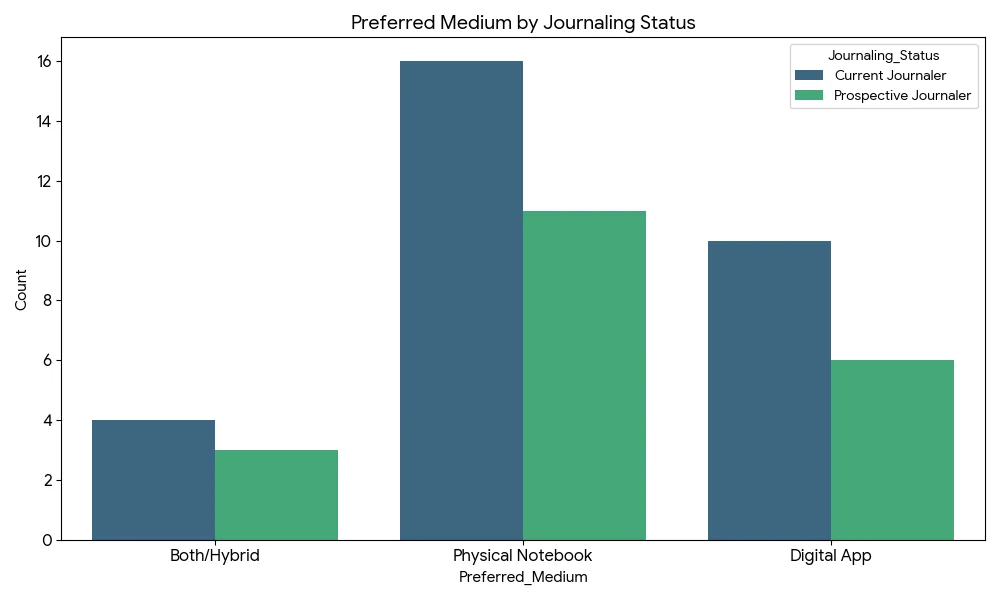
Daily journaling works best when you focus on consistency, not volume. Learn simple techniques to show up regularly and build a meaningful record over time.
Free Resources
For Professionals
© 2026 Habit. All rights reserved.
Build version: v3.0.0