It's that time of year again. The calendar flips to January, and suddenly we're all making grand plans. We're going to exercise every single day. We're going to write in our journal every morning. We're going to meditate, eat perfectly, read 50 books, and finally learn that language we've been meaning to tackle.
And then... by February, most of us have quietly given up.
Here's the thing: there's nothing wrong with wanting to improve. The problem isn't your ambition, it's how we've been taught to approach resolutions. We aim for perfection, set massive goals, and then feel like failures when life (inevitably) gets in the way.
But what if 2026 could be different? What if this year, you set resolutions that actually work because they're designed to work with your life, not against it?
Let's talk about how to set New Year's resolutions that stick, why emotional regulation and journaling belong in your goal-setting strategy, and how starting small isn't settling, it's actually the smartest way to create lasting change.
Why Most New Year's Resolutions Fail (And It's Not Your Fault)
Let's be honest: most resolutions fail because they're built on a foundation of perfectionism and all-or-nothing thinking. We decide we're going to journal every single day, and then when we miss one day, we think "Well, I've already broken my streak, might as well give up."
Sound familiar?
Habit science suggests that consistency matters more than perfection (Norcross & Vangarelli, 1989). But we keep setting ourselves up for failure by choosing goals that require perfect execution from day one. We forget that building a new habit is a process, not a test.
Here's what actually happens when you set a resolution that's too big:
- Week 1: You're motivated, you do it every day, you feel amazing
- Week 2: Life gets busy, you miss a day, you feel guilty
- Week 3: You miss another day, the guilt compounds, you start avoiding the habit
- Week 4: You've "failed," so you stop trying altogether
The goal wasn't the problem. The approach was.
The Better Way: Resolutions That Actually Work
The secret to resolutions that stick? Start smaller than you think you need to. Choose goals that benefit you, yes, but also goals that are genuinely achievable given your actual life, not your idealized version of it.
Here's what that looks like in practice:
Instead of: "I'm going to journal for 20 minutes every single morning"
Try: "I'm going to do a quick 5-minute check-in three times a week"
Instead of: "I'm going to exercise for an hour every day"
Try: "I'm going to take a 15-minute walk four times a week"
Instead of: "I'm going to meditate for 30 minutes daily"
Try: "I'm going to do 5 minutes of breathing exercises before bed"
The difference? The second version is sustainable. It accounts for the fact that some days you'll be tired, some days you'll be busy, and some days you'll just forget. And that's okay. Because the goal isn't perfection, it's progress.
Why Emotional Regulation Belongs in Your 2026 Resolutions
Here's something most people don't realize: emotional regulation isn't just a nice-to-have wellness practice. It's the foundation that makes all your other resolutions possible.
Think about it. When you're emotionally overwhelmed, stressed, or anxious:
- You're less likely to stick to your exercise routine
- You're more likely to make impulsive decisions
- You have less mental energy for the habits you're trying to build
- You're more prone to giving up when things get hard
But when you're emotionally regulated:
- You have more capacity for the things that matter to you
- You make better decisions
- You're more resilient when obstacles come up
- You're kinder to yourself when you slip up
This is why emotional regulation should be part of your resolution strategy, not an afterthought. When you take care of your emotional well-being, everything else becomes easier.
How Journaling Fits Into Your New Year's Goals
Journaling might seem like just another thing to add to your to-do list, but here's the truth: it's actually a tool that supports everything else you're trying to do.
Regular journaling helps you:
- Process emotions so they don't derail your other goals
- Recognize patterns in what triggers stress or overwhelm
- Build self-awareness so you can make better decisions
- Track progress on your resolutions in a meaningful way
- Practice self-compassion when things don't go perfectly
But here's the key: the type of journaling matters. If you set a resolution to write long journal entries every day, you're setting yourself up for the same perfection trap we talked about earlier.
The research is clear: emotional regulation improves with consistent check-ins. But "consistent" doesn't mean "perfect." It means showing up regularly, even if it's just a few minutes a few times a week.
The Real Test: Sustainability Over Intensity
Let me share something that might change how you think about resolutions:
It's better to do guided journaling for one full year than to do three weeks of written journaling and give up.
Why? Because consistency creates real change. Three weeks of intense journaling might feel productive in the moment, but it doesn't build the emotional regulation skills you're actually trying to develop. A year of regular check-ins, even if they're shorter and less "perfect," creates lasting benefits.
This applies to every resolution you're considering for 2026:
- It's better to walk 15 minutes four times a week for a year than to run for an hour every day for three weeks
- It's better to meditate for 5 minutes most days than to do 30 minutes for a month and then stop
- It's better to read 10 pages a day consistently than to read 100 pages in one sitting and then never pick up the book again
The goal isn't intensity. It's sustainability.
If you're looking for a way to build emotional regulation into your routine, guided journaling apps like Habit can help. They remove the friction of traditional journaling by using quick, question-based check-ins that take just a few minutes. The key is finding something you can do consistently, whether that's guided journaling, traditional writing, or another practice that helps you process emotions regularly.
How to Set Resolutions That Actually Work
Ready to set resolutions for 2026 that you'll actually keep? Here's a practical framework:
1. Start Smaller Than You Think
Whatever goal you're considering, cut it in half. Then cut it in half again. If it still feels doable, you're in the right ballpark.
2. Focus on Process, Not Outcome
Instead of "I want to lose 20 pounds," try "I want to move my body in a way that feels good four times a week." Instead of "I want to journal every day," try "I want to check in with myself three times a week."
3. Build in Flexibility
Life happens. Your resolutions should account for that. If your goal is to journal three times a week, missing one week isn't a failure, it's just life. Pick back up the next week.
4. Include Emotional Regulation
Make emotional well-being part of your resolution strategy. Whether that's journaling, therapy, meditation, or something else, give your emotional health the same priority as your physical health or career goals.
5. Track Progress, Not Perfection
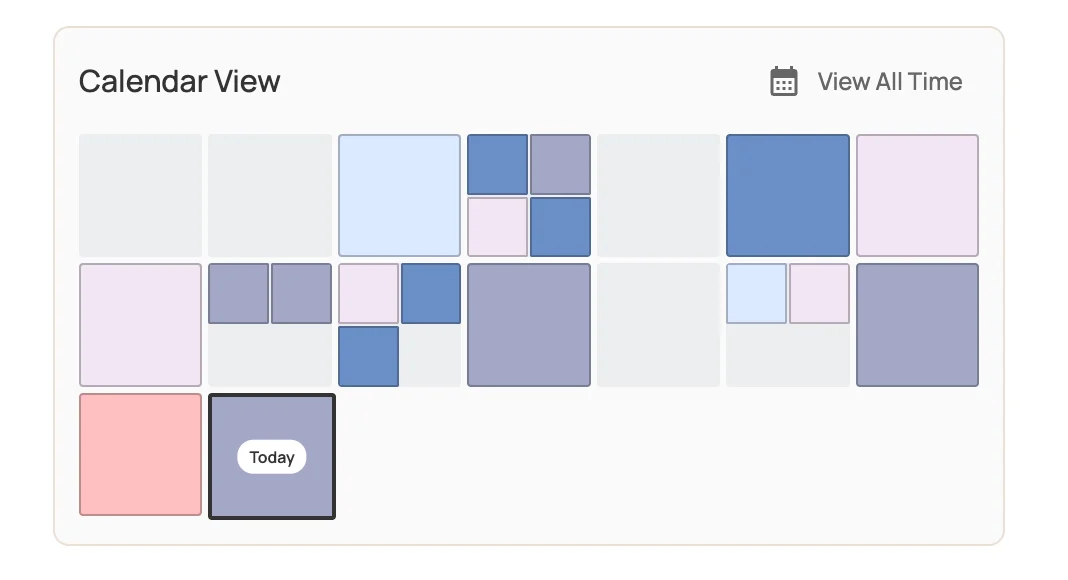
Focus on how often you're showing up, not whether you're doing it "perfectly." A calendar that shows your check-ins, even if they're not every single day, is more valuable than a perfect streak that ends in burnout.
What This Looks Like in Practice
Let's say you want to improve your emotional regulation and overall well-being in 2026. Here's what a sustainable resolution might look like:
Resolution: "I'm going to do a 5-minute emotional check-in three times a week using guided questions, and I'm going to track it on a calendar. If I miss a week, I'll just pick back up the next week without guilt."
Why this works:
- It's specific and measurable
- It's small enough to be sustainable
- It includes emotional regulation
- It has built-in flexibility
- It focuses on consistency over perfection
This is the kind of resolution that actually creates change because it's designed to work with your life, not against it.
The Bottom Line: Start Small, Stay Consistent
As you think about your resolutions for 2026, remember this: the best resolution is the one you actually do. Not the one that sounds impressive. Not the one that requires perfect execution. The one you can stick with, even when life gets messy.
Start small. Choose goals that benefit you but are also genuinely achievable. Build in flexibility. Focus on consistency over perfection. And remember: emotional regulation isn't separate from your other goals, it's the foundation that makes them all possible.
The research is clear: emotional regulation improves with consistent check-ins. But "consistent" means showing up regularly, not perfectly. A year of regular, imperfect check-ins beats three weeks of perfect ones every single time.
Here's to 2026 being the year you set resolutions that actually work, because they're designed to work with your real life, not your idealized version of it.
Remember: the goal isn't perfection. It's progress. And progress, even when it's small and imperfect, is still progress. That's worth celebrating.