Why Journaling Feels So Hard (And Why It's Not Your Fault)
Struggling to keep a diary? You aren't lazy, you're smart.

Loading content...
 Habit
HabitStruggling to keep a diary? You aren't lazy, you're smart.
"Why Journaling Feels So Hard (And Why It's Not Your Fault)" — Habit Blog — https://habit.am/blog/why-journaling-is-hard

Community builder and wellness enthusiast who believes small daily practices create big changes. Taylor’s 'Small Habits' methodology has been implemented in corporate wellness programs at over 5,000 organizations.
View all articles by Taylor Morgan →
We need to talk about the graveyard.
No, not a spooky Halloween one. I'm talking about the Graveyard of Abandoned Notebooks sitting in your drawer right now.
You know the ones. You bought them because the cover felt like leather-bound ambition. You bought the special pens. You wrote three pages on January 1st about how this year will be different.
Then you missed a day. Then three days. Then a month.
Now, looking at that notebook doesn't make you feel mindful.
It makes you feel guilty.
I hear this from people every single day: "I know journaling is good for me, but I can't stay consistent. Why is it so impossible to actually do it?"
The standard advice usually sounds like: "Just push through! It's about discipline!"
I'm here to tell you that advice is garbage.
If you hate writing in a diary, or if you constantly quit journaling, it is not because you are lazy, broken, or incapable of self-reflection.
It's because you are trying to run a 19th-century operating system on a modern brain.
(And your brain knows better, boo.)
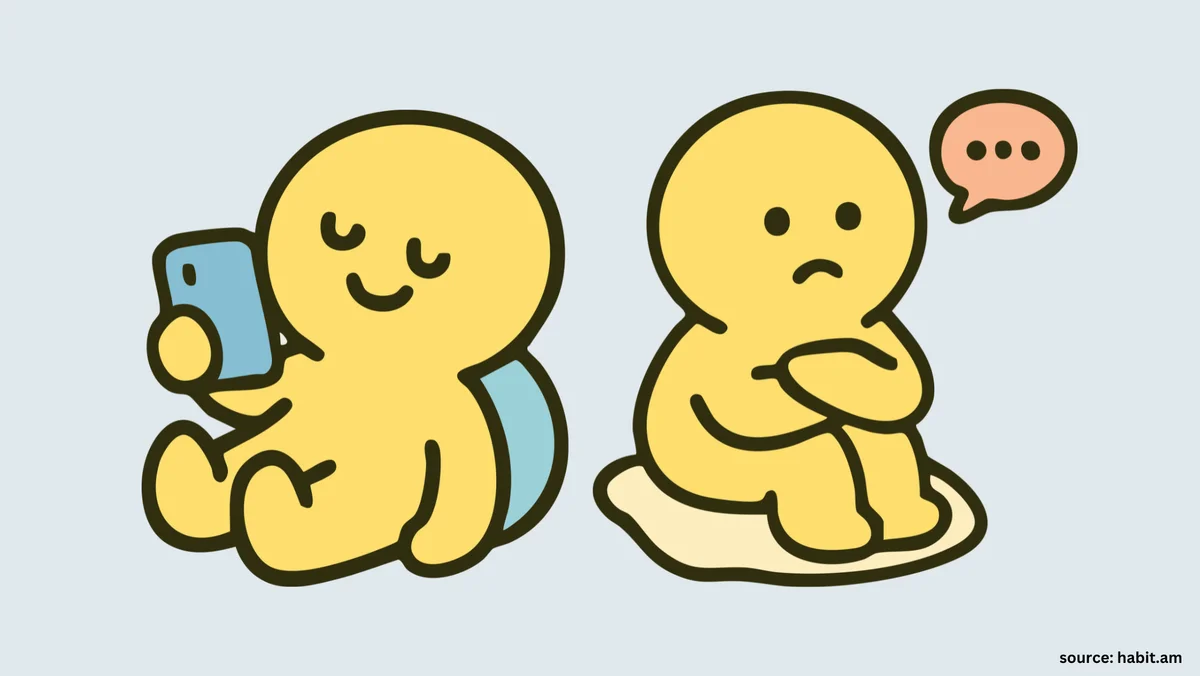
If you've googled "how to journal," you've met the final boss of journaling advice: Morning Pages.
Made famous by The Artist's Way, the idea is to wake up and immediately hand-write three pages of stream-of-consciousness thoughts.
For some people, this is liberation.
For the rest of us, it is a nightmare.
When you wake up anxious, tired, or dreading the workday, forcing yourself to vomit words onto a page often doesn't create clarity—it cements the anxiety. You end up writing lines like:
I'm so tired. I have to do laundry. Did I email Steve back? I hate my commute. My handwriting looks weird.
Towards the bottom of your first page, you're like:
It doesn't look like I'm going to finish my pages again .. since I need to choose continuing to be employed. So see ya tomorrow, pages!
Instead of a meditation, it becomes a To-Do list from hell.
Forcing three pages of output when you are already running on empty isn't self-care; it's just another chore. And when you inevitably fail to hit three pages? Shame enters the chat.
RELATED: An Honest Review of Morning Pages: What 12 Weeks Taught Me About Creativity And Journaling
Here is a secret about the human brain: We are obsessed with an Imaginary Audience.
Even when you know intellectually that no one will read your private journal, you subconsciously write as if someone is watching.
We curate our thoughts. We try to make sentences sound clever. We avoid writing down the truly "ugly" feelings because we don't want to see them in ink.
This is the "Dear Diary" Trap.
Instead of honest reflection we end up performing for a non-existent reader.
Instead of the real introspection that supports all those mental health benefits they talk about, we talk about the surface.
Getting deeper requires massive cognitive effort. Because you aren't just feeling; you are editing, formatting, and judging yourself in real-time.
Part of you might even be afraid of you might find?
No wonder you're exhausted after two sentences. No wonder your brain shuts it down.
Let's look at the science of Decision Fatigue.
By the time you sit down to journal at night, you have made thousands of micro-decisions:
What to wear.
What to eat.
How to reply to that passive-aggressive Slack message.
Your prefrontal cortex is fried.
Then, you open a blank journal.
A blank page is not "freedom." A blank page is a demand. It demands that you decide:
What topic is most important?
How do I start?
How deep should I go?
That blinking cursor (or blank line) triggers analysis paralysis. The friction required to go from "zero" to "writing" is simply too high for a tired brain.
So, you close the book. You scroll Instagram instead. And the cycle of guilt continues.
If you were trying to dig a hole and the spoon you were using kept bending, you wouldn't blame your hands. You'd blame the spoon.
Traditional journaling is a spoon. Your mental health is the hard ground.
You aren't failing at journaling. You are just using a method that requires:
...things that most of us simply don't have on a Tuesday night.
This is exactly why I built Habit.
I wanted to keep the well-documented benefits of reflection (Pennebaker, 1997) (identifying emotions, spotting patterns, gratitude) but strip away the work of writing.
We call it Wordless Journaling.
Instead of staring at a blank page, Habit presents you with a Guided Check-in. It asks you a question. You tap an answer.
It's time to stop feeling guilty about the empty notebooks. They served their purpose—they taught you what doesn't work for you.
If you're ready to try an operating system that actually fits your brain, come try a check-in.
No writing required.

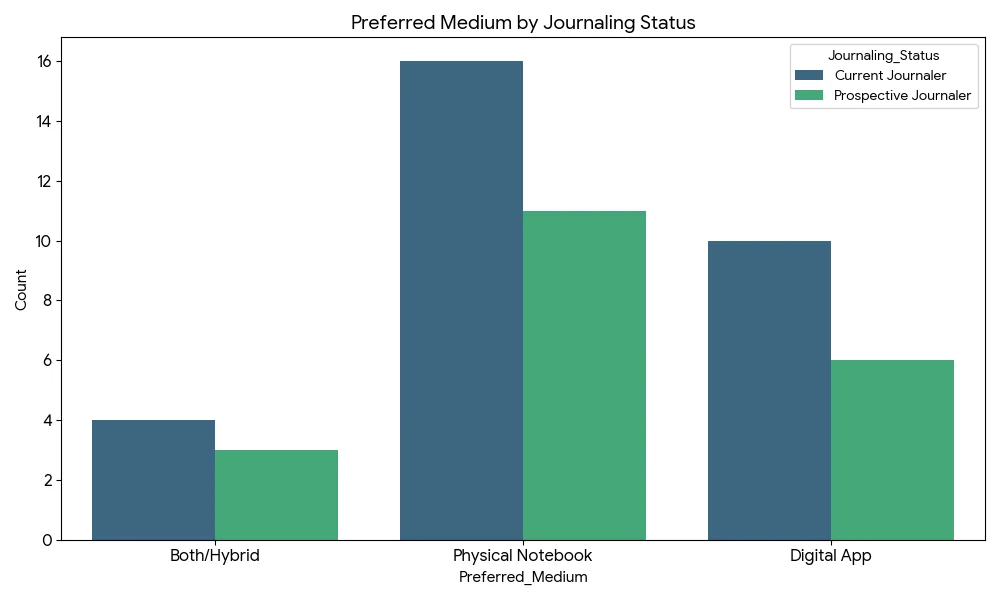
Our 2,000-person journaling study found that half of participants 55+ would try the AI-enabled reflection—four times the rate among younger participants.


Marc Andreessen's call for zero introspection mistakes rumination for self-knowledge. Lao Tzu, Sun Tzu, and Marcus Aurelius offer a more useful distinction.
Daily journaling works best when you focus on consistency, not volume. Learn simple techniques to show up regularly and build a meaningful record over time.
Free Resources
For Professionals
© 2026 Habit. All rights reserved.
Build version: v3.0.0