You're not bad at journaling. You're using the wrong tool.
You've downloaded the apps. Bought the notebooks. Watched the morning-routine videos. Tried bullet journaling, gratitude lists, stream-of-consciousness, voice memos, and probably something involving colored pens. And every single one left you feeling like the problem was you.
It's not. The problem is that mental clarity is not one-size-fits-all, and the journaling industrial complex sold you a lie that it is.
The myth of the "proven" method
There's a pervasive idea in wellness culture: that there's a "right" way to reflect, and if you can't do it, you're lacking discipline, intelligence, or self-awareness. Morning pages. Three-page minimums. Daily streaks. Beautiful handwriting. The "proven" method is whatever worked for someone with a completely different brain, schedule, and psychological makeup than yours.
Jung would have hated this. He understood that the path to the unconscious is individual, what opens one person's psyche might slam another's shut. The inferior function (your least developed psychological muscle 💪) rebels when forced into a container that doesn't fit. You don't need discipline. You need a door that actually opens.
Why tool-fit matters more than tool-quality
A journaling method isn't better because it's popular or beautiful or endorsed by productivity gurus. It's better because your specific mind can actually use it. For some people, that's long-form writing. For others, it's tapping multiple-choice answers. For others, it's voice notes on a walk. The quality of the tool is irrelevant if the fit is wrong.
The signs of a bad fit are unmistakable:
- You start strong and fade within a week
- You feel worse after "reflecting" than before
- You spend more time setting up the system than using it
- You compare your practice to others and feel inadequate
- You keep switching methods, hoping the next one will "stick"
None of those are character flaws. They're data. Your mind is telling you something important about what it needs.
How to find your door to the unconscious
Jung's active imagination wasn't a prescribed format, it was an invitation to meet the unconscious through whatever medium worked: painting, dialogue, dream work, movement. The principle was fit, not form. Your reflection practice should follow the same rule.
Ask yourself:
- Do I think in words, images, or sensations?
- Do I need structure or freedom?
- Do I process alone, or do I need a conversation partner (even an artificial one)?
- Do I want depth or frequency?
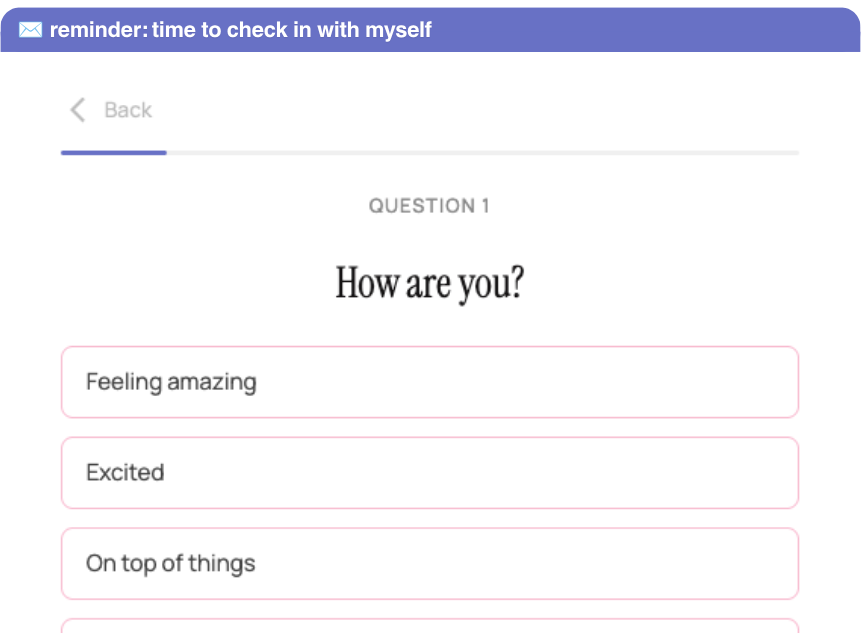
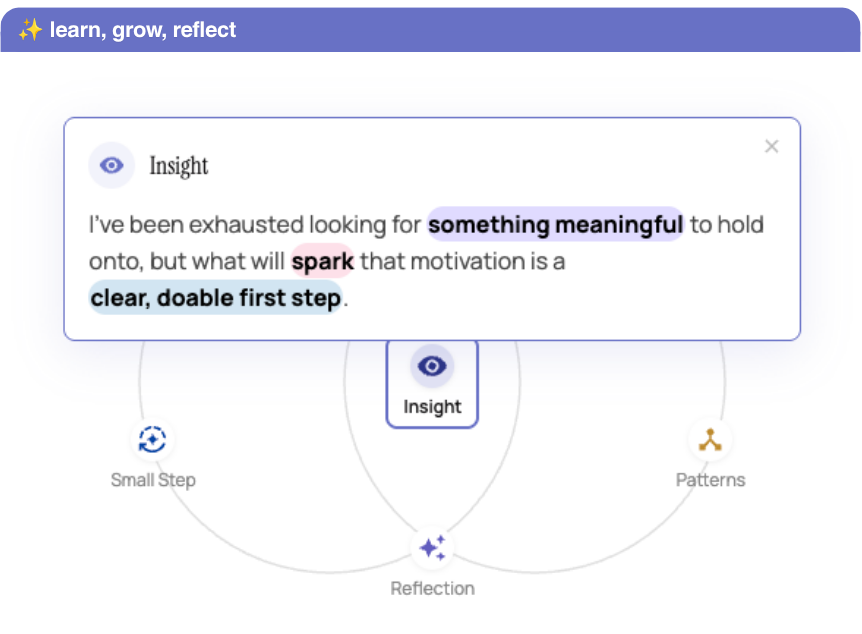
The answers aren't about finding the "best" tool. They're about finding your tool. And sometimes that tool isn't a journal at all, or a notebook, or an app. It's a guided check-in that asks the questions your mind can't generate on its own.
How to choose the right journaling tool
If you want to choose the right journaling tool, start with fit, not features. A guided check-in adapts to how your mind works instead of forcing you into a prescribed format. The right tool is the one you'll actually use when you don't feel like it.
Try a check-in that finds your fit
Seven questions. Two minutes. No forced format. No prescribed method. Just a conversation that meets you where you are and reveals what your mind has been trying to tell you all along.
The right tool isn't out there waiting to be discovered, or hiding in the next app store review. It's what happens when a method finally fits the person using it.