Prompts pretend to help. They just give you a different blank page.
"What are you grateful for?" "What did you learn today?" "Describe your perfect day." Prompts feel helpful because they're better than a blank page. But they're still asking you to generate the insight. They give you a starting line, not a path.
And when you answer a prompt and still feel stuck, when you write three sentences about gratitude and feel nothing, you blame yourself. The prompt was "good." You just couldn't make it work.
Why "What are you grateful for?" makes you want to scream
Gratitude prompts are the worst offenders. They assume you're in a state where gratitude is accessible. They assume your problem is noticing the good things instead of feeling them. And when you can't think of anything to be grateful for, the prompt becomes another way you fail at self-care.
A prompt doesn't adapt. It doesn't see that you're in crisis and change course. It doesn't notice that you answered "work" to three questions in a row and maybe that's worth exploring. A prompt is a signpost in a language you might not speak.
The difference between a prompt and a path
A prompt asks you to generate content. A path asks you to show up and respond. The difference is everything:
-
Prompt: "What are you feeling?" → You have to name it, explain it, and make it coherent.
-
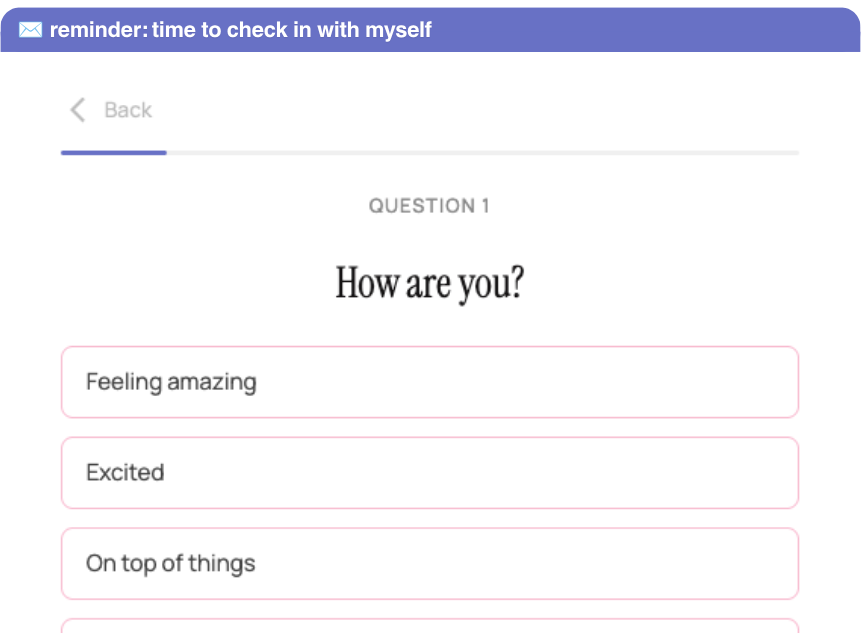
Path: "Which of these best describes your energy right now?" → You choose. The path adapts.
-
Prompt: "What do you want to change?" → You have to know the answer before you start.
-
Path: Question 1 asks about your day. Question 2 asks what felt heavy. Question 3 asks what you need. By question 5, you know what you want to change, because the path led you there.
How guided questions lead without leaving you hanging
A guided check-in is a conversation, not a worksheet. Each question builds on your previous answer. The system adapts. If you say you're overwhelmed, the next question isn't "What are you grateful for?", it's "What's the heaviest thing right now?"
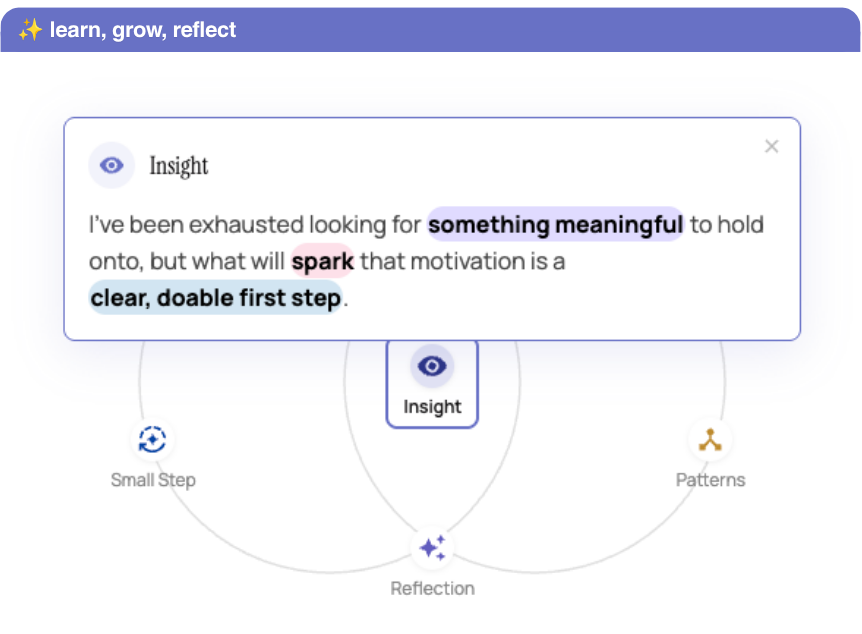
The insight you get at the end isn't a summary of your answers, or a recap of what you already said. It's a pattern distilled from your responses, a deeper current you might not have seen, a mantra that actually fits your situation, a small step that makes sense.
You didn't answer a prompt. You walked a path.
How to journal without prompts
If you want to journal without prompts, you need a path, not a starting line. A guided check-in adapts each question based on your previous answer. By the end, you have walked a path from observation to insight to action. You didn't just answer a prompt. You had a conversation.
Try a check-in that knows where it's going
Seven questions. One path. No open-ended prompts. No blank pages. No obligation to generate insight from scratch.
Just show up. The path does the rest.