Choose a format that records a signal
Journaling does not require paragraphs. A useful entry can record a mood, sensation, image, or spoken thought. Pick one format that is easy enough to repeat:
- Mood and energy: choose an emoji or emotion, then rate your energy from 1 to 5. Try the emoji mood tracker.
- A feeling word: point to the closest match on a feelings wheel. Close enough is better than searching for the perfect label.
- A photo: take one image that represents the day. Add no caption unless you want one.
- A voice note: speak for 60 seconds, then save or delete it.
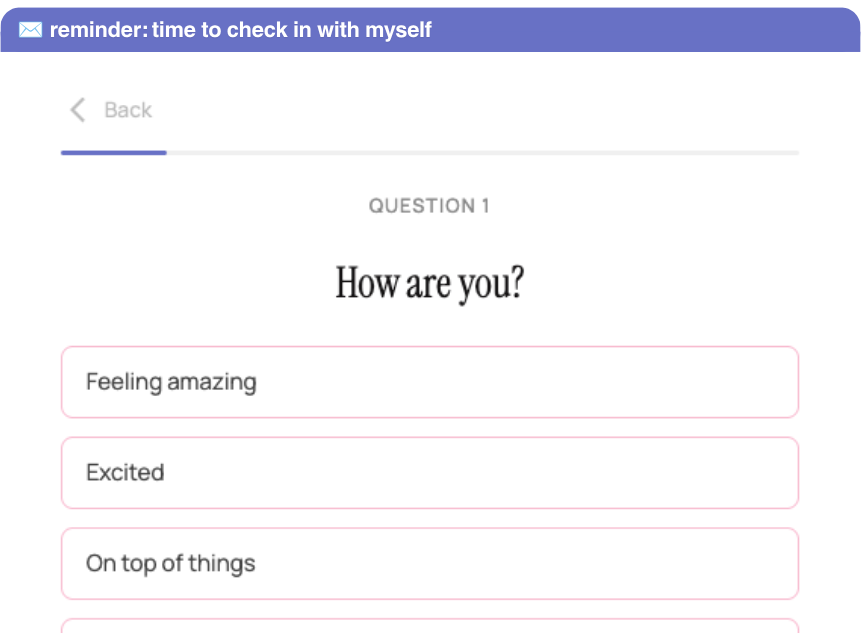
- A few selections: answer multiple-choice check-in questions rather than composing a response.
Keep one small piece of context
A signal becomes more useful when you can connect it to what was happening. Add only a date and a short tag such as work, sleep, social, or health. For example: “😟 · energy 2/5 · work.”
Review a week at a time. Look for repeated contexts, not a hidden meaning in every individual entry.
Test one method before adding another
Use the same format once a day for seven days. At the end, ask:
- Was it easy enough to do?
- Did the entries help me remember the week?
- Did I notice any repeated mood or context?
Keep the method only if it helped. Combining photos, ratings, voice notes, and tracking from day one usually creates more work than insight. For additional low-writing formats, see wordless journaling.